Project Cargo & Break Bulk
Project cargo logistics and break-bulk chartering on multi-purpose, heavy-lift, and tweendecker tonnage. Wind components, plant modules, steel structures, transformers, mining equipment. Routine capability at Bulkargo's project desk.
Project cargo and break bulk, defined
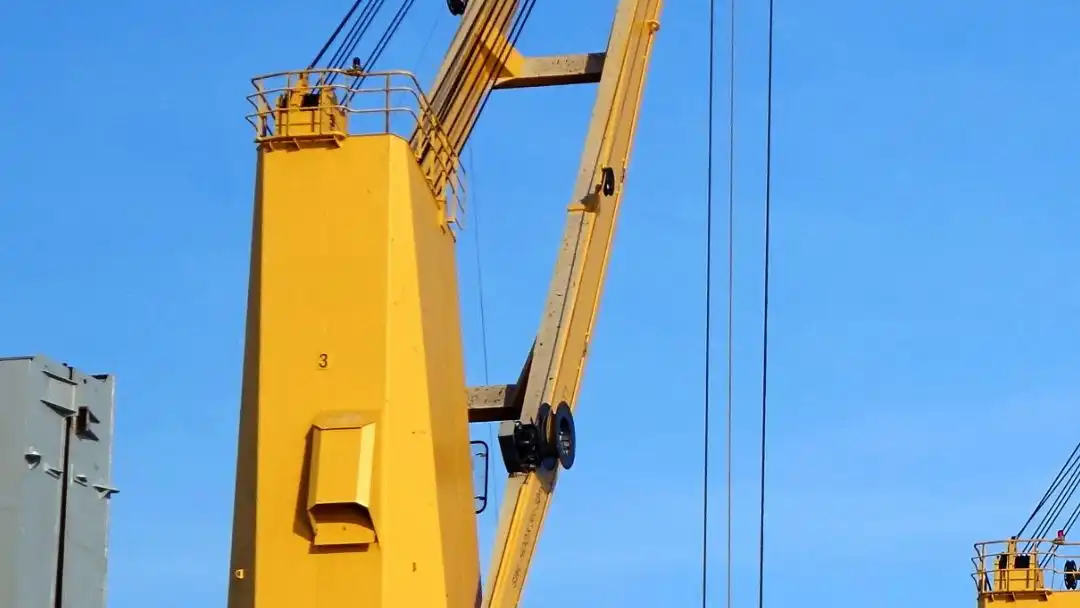
The work begins with the vessel envelope. Project cargo and break bulk move across a small specialist fleet: multi-purpose vessels (MPP) with onboard cranes rated 60 to 350 MT (combined lifts to 700 MT), heavy-lift vessels with 400, 700, or 1,000+ MT single-piece capacity, tweendeckers for stowage flexibility, open-hatch bulkers for long indivisible items, and general cargo ships for break-bulk programmes. Crane SWL, hold dimensions, tweendeck strength, weather-deck classification, and tanktop loading limits set the fixture before the rate does.
Within that fleet, two cargo categories sit outside the container and dry-bulk worlds. They share tonnage, but they are not the same thing.
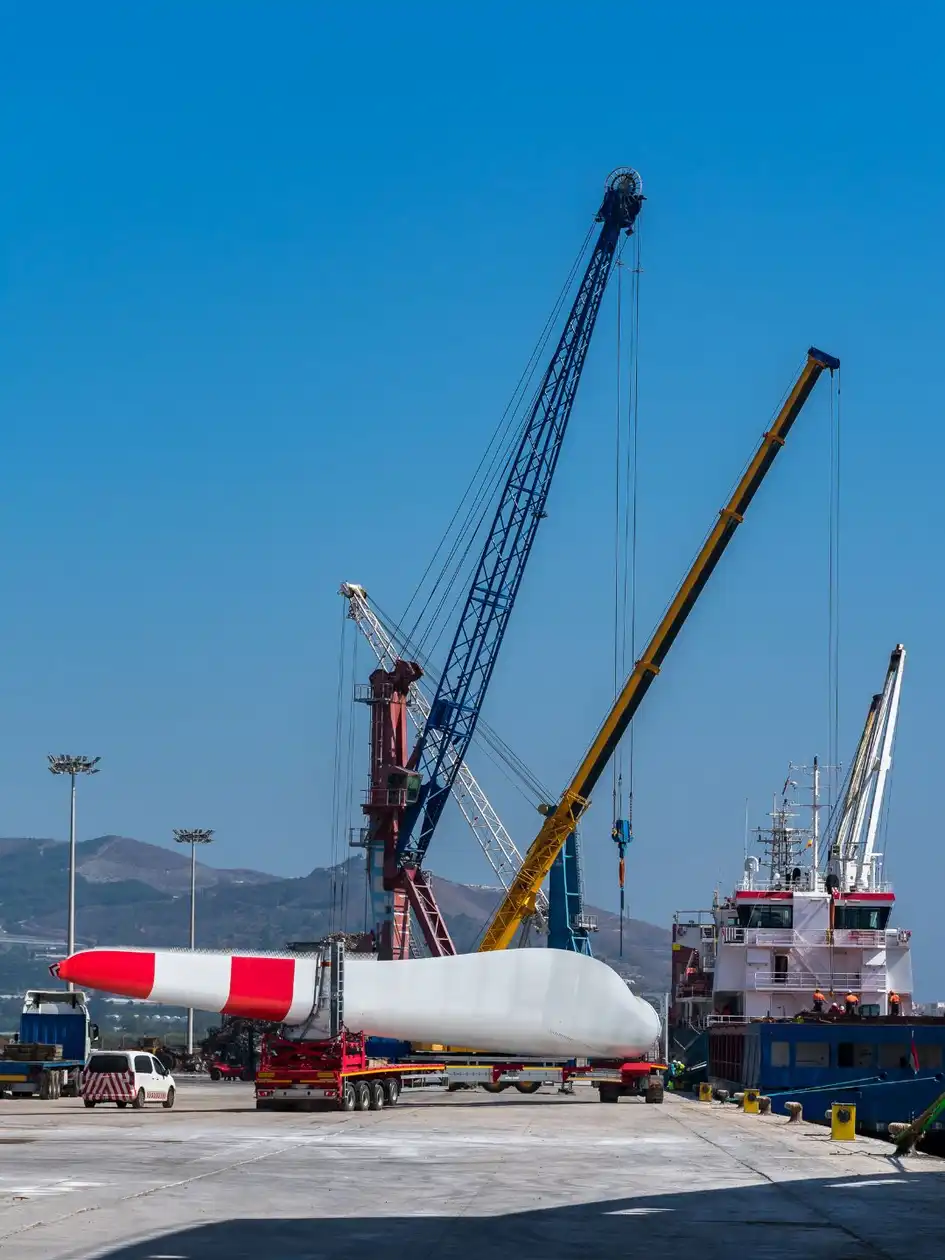
Project cargo is oversized, heavy, or irregularly shaped: items that cannot be containerised and frequently cannot be carried by conventional general-cargo tonnage. Typical pieces include wind turbine blades and nacelles, transformers, port cranes, industrial plant modules, prefab construction sections, heavy machinery such as excavators and crushers, pressure vessels, and bridge sections. Each piece is treated as an engineering problem: lift points, centre of gravity, sea-fastening, and air-draft all have to clear before the cargo can be loaded.
Break bulk is general cargo shipped as individual units rather than in bulk holds or shipping containers. Steel coils and plate, sawn lumber, bagged commodities (urea, cement, fertiliser), drummed cargo (chemicals, lubricants, packed bitumen), and packaged machinery are the classic examples. Break-bulk parcels are smaller per unit than project pieces, but they still need stowage planning, dunnage, and lashings that container shipping handles inside the box.
We broker project cargo fixtures and break-bulk parcels across this fleet as part of Bulkargo’s broader ship brokering practice: since 2022 the firm has fixed project cargo and machinery alongside its dry-bulk book. The work spans multi-port lifting plans, heavy-lift crane fixtures, lashing and securing plans signed off by master and surveyor, and the inland coordination that frequently sits at either end of a project voyage.
Cargoes we cover
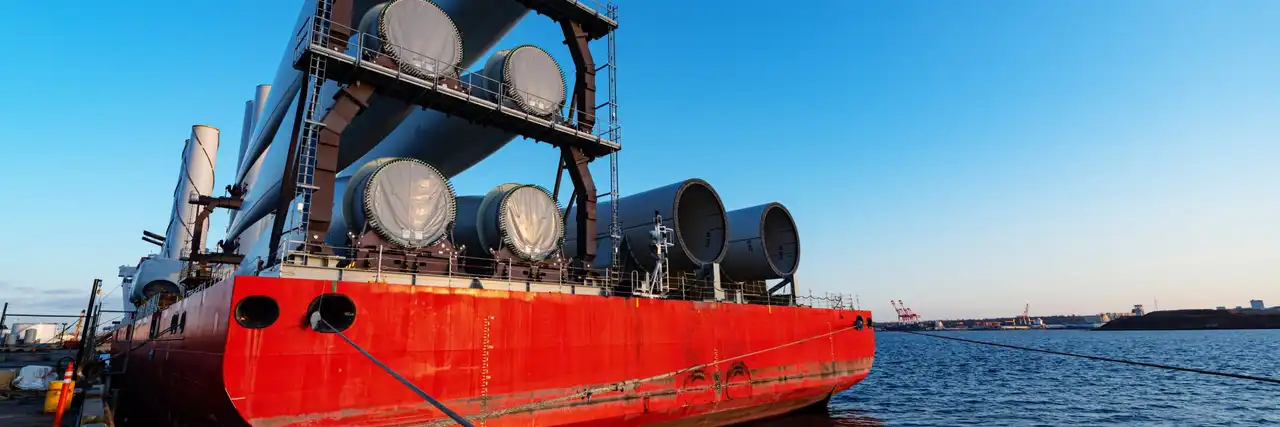
Each industry presents its own cargo signature. Wind components are dimensionally enormous but light per metre of length: blades demand cradles and careful weather-deck handling, while nacelles concentrate weight at a single lift point. Mining cargoes invert the problem, with excavator bodies, crusher housings, and mill liners that pack short, dense weight into awkward shapes. Construction and EPC clients ship pre-fabricated modules and pressure vessels where the engineering documentation is as critical as the lift. Infrastructure projects bring port cranes, bridge sections, and long pipe with overhang. Most projects mix two or three at once.
Energy & Renewables
Wind tower sections, nacelles, hubs, blades. Transformers, generators, solar trackers. Battery storage units and HVDC components.
Construction & EPC
Prefab building modules, steel bridge sections, pressure vessels, large tanks, boilers, structural steel.
Mining & Heavy Industry
Excavators, draglines, crushers, conveyor systems, mill components, refinery modules, dragline buckets and booms.
Infrastructure
Port cranes, ship-to-shore gantries, rail equipment, locomotives, large-diameter pipe, large generators for substations.
Industrial Modules
Process modules for refineries, LNG terminal modules, petrochemical plant skids, modular building units.
Break Bulk
Steel coils and plate, bagged commodities, drummed cargo, palletised industrial goods, lumber, project pipe.
A small specialist fleet
Most of the work in project brokerage is knowing which ship is sailing past your load port empty in three weeks.
- Multi-purpose vessels (MPP) with onboard cranes, 8,000 to 25,000 DWT, SWL 60 to 350 MT per crane (combined lifts up to 700 MT)
- Heavy-lift vessels with 400, 700, or 1,000+ MT lift capacity for single-piece project items
- Tweendeckers for stowage flexibility across multiple cargo grades
- Open-hatch bulkers for long, indivisible cargoes that need over-the-top loading
- General cargo vessels for break-bulk programmes that do not need heavy lift
Why project cargo needs a specialist broker
Generalist freight forwarders run aground on project cargo because the work begins below the rate, in the technical envelope of the vessel. Those constraints are not negotiable: get any one wrong and the cargo cannot be loaded when the ship arrives.
Stowage planning runs through the master and chief officer, with a Marine Warranty Surveyor (MWS) often retained by the cargo interest or its underwriter. The MWS reviews sea-fastening calculations, lashing arrangements, stability conditions, and the proposed weather route. On heavy single pieces, the surveyor will be on the quay for the lift itself and sign off the securing arrangements before the vessel sails. Brokering at this level means anticipating the surveyor’s questions before the nomination is firm.
Securing and lashing are engineering problems. Load distribution across deck plating, point loads on tanktops, dunnage selection, and weather routing all feed into the lashing plan that governs whether the cargo survives the voyage intact. Multi-port loading compounds the work: when modules originate from two or three different suppliers, the vessel has to be positioned and stowed so each call adds cargo without disturbing what is already onboard.
Putting cargo on the wrong vessel does not produce a slightly worse outcome: it produces cargo that physically cannot be loaded, or has to be lifted twice at extra cost. The vessel choice is upstream of the rate.
Lift planning sits alongside vessel choice. Where shore cranes are available and rated for the heaviest piece, they are usually the cheaper option. Where they are not, the fixture moves to a heavy-lift vessel with onboard cranes, sometimes configured for tandem lifts with a lifting beam between two booms. On the most demanding pieces, a floating crane or jack-up rig may be brought alongside. Each option shifts rate, schedule, and technical risk, and the right answer is rarely obvious from the cargo list alone.
How Bulkargo fixes a project voyage
A project fixture is not a spot booking. The fleet is small, the cargo is bespoke, and the chain stretches from drawing review to inland delivery on each end. Standard lead time from inquiry to sailing is four to eight weeks, and the drivers are predictable: limited heavy-lift tonnage in the relevant trade lane, technical pre-clearance with the carrier, port-side coordination for cranes and berths, and inland route surveys where the cargo moves by road or rail. Multi-port loading or tight weather windows can push that to ten or twelve weeks. The steps below describe the sequence we run from inquiry through discharge.
- 01
Cargo assessment
Dimensions per piece, weights, centre of gravity, lift points and method, sensitivity to weather or movement, total stowage volume.
- You provide
- Drawings, cargo list, dimensions
- We handle
- Technical assessment, OOG analysis
- 02
Lift assessment
Crane SWL for the heaviest single piece. Tandem lift requirements. Heavy-lift vessel selection if shore cranes inadequate. Quay strength and air-draft.
- We handle
- Lift plan, vessel-vs-shore analysis
- 03
Vessel selection
MPP vs heavy-lift vs tweendecker. Hold dimensions vs cargo dimensions, deck cargo permitted, crane reach and SWL, draft, age, trading pattern.
- We handle
- Two to four vessel shortlist
- 04
Stowage planning
Working with master and chief officer on stowage and securing plan. Lashing arrangements, sea-fastening to deck or hold plating, stability calculations.
- We handle
- Stowage plan, MWS engagement if needed
- 05
Port & inland coordination
Crane availability and booking at both ports, berth restrictions, customs for oversized cargo, route surveys for inland transport, permits.
- We handle
- Port liaison, inland routing, permitting
- 06
Documentation & voyage
Charter party (Heavycon, Projectcon), bill of lading with cargo description and marks, MWS approval, insurance certificates. Voyage monitoring through discharge.
- We handle
- CP review, post-fixture support, dispute handling
The fixture does not end when the vessel sails. Post-fixture work runs in parallel with the voyage: coordinating with the MWS surveyor on voyage observations, monitoring weather routing where the carrier or underwriter requires a specific track, and preparing port-side reception. Reception planning covers shore cranes or onboard discharge, the receiving berth with the agent, trailers or modular transporters for the inland leg, and customs paperwork for oversized cargo. Out-of-gauge cargo frequently triggers permits, escort requirements, and route surveys, and the documentation needs to be in place before the vessel arrives. We stay on the file through discharge, demobilisation, and final delivery. Send the cargo list and ports and we will start the technical workup.
What clients ask first
Maximum single-piece weight?
Door-to-door capability?
Lead time?
Container or RoRo?
Related references
Cargo and vessel guides
Adjacent desks
Cargoes we have fixed since 2022
- Cement
- Quicklime
- Bitumen
- Project cargo
- Machinery
- Mining ores and earths
Ready to fix?
Tell us about your cargo. A broker will respond the same business day with an initial market read and next steps.