Dry Bulk Shipping
Comprehensive guide to dry bulk shipping: cargo types, stowage, vessel selection, and how bulk commodities move worldwide.
Reviewed by Luis Carlos Alvarez, Head of Commodities
What this hub covers
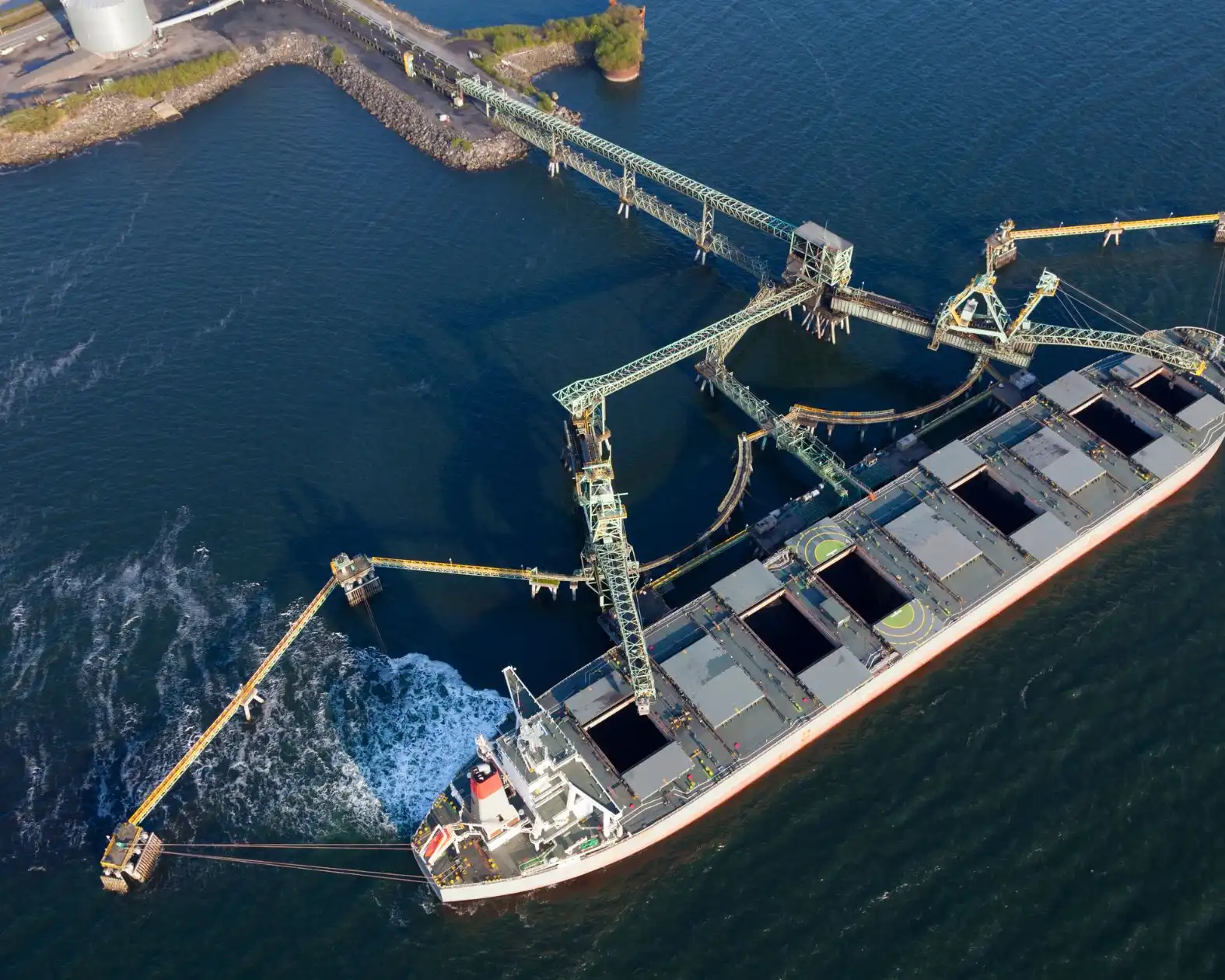
Dry bulk shipping moves unpackaged commodities, poured straight into a vessel’s holds rather than boxed or palletised. It is the largest segment of seaborne trade by tonnage, and the commodity decides almost everything that follows: how the cargo stows, which vessel class can carry it, and which loading and safety rules apply under the IMSBC Code.
This hub is organised by cargo. The major trades have their own pages, including iron ore, coal, grain, bauxite, and cement. Each page sets out the cargo’s stowage factor, its IMSBC group and hazards, the vessel classes that typically carry it, and the trade lanes it moves on.
Who it is for and where to start
The pages here are written for shippers, traders, and operators planning a bulk move and deciding which vessel and what terms fit the cargo. The thread that ties the cargoes together is the stowage factor, the cubic space a tonne of a given commodity occupies, which determines whether a cargo fills the holds by weight or by volume.
- Start with the concept that governs vessel fit: the stowage factor, then the cross-commodity stowage guide.
- Move to a specific trade: iron ore, coal, or grain.
- Match the cargo to a hull on the bulk carriers hub.
To move a parcel, tell us about your cargo and we will propose the vessel and the terms.
Aggregates Shipping
How construction aggregates (sand, gravel, crushed stone) move by sea: IMSBC classification, cargo properties, vessel typing, and the dominant short-sea and deep-sea aggregate trades.
ExploreAlumina Shipping
How alumina (aluminium oxide) moves by sea: IMSBC ALUMINA classification, dust and flow behaviour, vessel typing, and the bauxite-refinery-to-smelter trade lanes.
Clinker Shipping
How cement clinker moves in bulk by sea. Vessel typing, hold prep, IMSBC carriage, abrasion control, and the intra-Asia and Mediterranean lanes that anchor the trade.
Coal Shipping
How coal moves by sea. IMSBC Group B classification, COAL schedule properties, vessel typing across Capesize to Handysize, and the dominant Indonesia, Australia, Russia and Colombia lanes.
Cement Shipping
How Portland cement moves in bulk by sea. Vessel typing, hold preparation, IMSBC carriage requirements, trade lanes, and the operational risks that drive fixture economics.
Fertilizer Shipping
Operator briefing on bulk fertilizer shipping. Urea, DAP, potash, and AN-based grades. Cargo properties, IMSBC schedule entries, self-decomposition risk, hygroscopic care, vessel typing, and the major fertilizer trade routes.
Grain Shipping
Operator briefing on grain shipping. Cargo properties, vessel typing, the IMO International Grain Code, fumigation cycle, and the major sea-borne lanes that move wheat, corn, soybeans, and barley.
Iron Ore Shipping
How iron ore moves by sea. IMSBC IRON ORE FINES Group A liquefaction regime, Capesize and VLOC dominance on the Brazil and Australia lanes into North Asia, and TML certification.
Bauxite Shipping
How bauxite moves by sea. IMSBC BAUXITE FINES Group A schedule added post-Bulk Jupiter 2015, Capesize-dominant Guinea and Australia lanes into China, and moisture certification.
Minerals Shipping
How bulk minerals move by sea: an index of the mineral commodities Bulkargo charters, from iron ore and bauxite to alumina, aggregates, salt and sulphur, each with its own cargo page.
Pet Coke Shipping
How petroleum coke moves by sea. IMSBC PETROLEUM COKE schedule, uncalcined and calcined grades, sulphur and dust handling, and the US Gulf to India and Mediterranean lanes.
Salt Shipping
How salt (sodium chloride) moves by sea: IMSBC SALT classification, corrosion and hold-cleanliness control, vessel typing, and the major solar and rock salt trades.
Scrap Metal Shipping
How ferrous scrap moves by sea as loose bulk: HMS and shredded scrap properties, self-heating swarf, hold abrasion, vessel typing, and the major scrap export lanes.
Stowage Factor
Understanding stowage factor: how to calculate cargo space requirements, stowage factor tables, and planning vessel capacity.
Cargo Stowage Factor Guide
Stowage factors and IMSBC groups for the major dry bulk cargoes, with how to read them for vessel fit and safe carriage.
Sugar Shipping
Operator briefing on raw and refined sugar shipping. Cargo properties, vessel typing, polarisation certificates, hold cleanliness, and the major Brazil, Thailand, India, and Australia sea-borne sugar lanes.
Sulphur Shipping
How sulphur moves by sea: IMSBC SULPHUR classification, dust flammability and corrosion control, the solid versus molten forms, vessel typing, and the major sulphur trades.
Wood Pellet Shipping
How wood pellets move by sea as biomass fuel: IMSBC WOOD PELLETS classification, oxygen depletion and self-heating control, vessel typing, and the major biomass trades.