What is a voyage charter?
A voyage charter is a contract under which the shipowner carries an agreed cargo between named load and discharge ports for a freight rate quoted per tonne, while keeping commercial and technical control of the vessel and paying its running costs.
The voyage charter is the workhorse instrument of the dry bulk trade. The shipowner stays in operational command of the ship. The charterer buys the carriage of a parcel from A to B, with laytime as the only clock that matters at the load and discharge ports. BIMCO’s GENCON 2022 form is the canonical voyage charter party in dry bulk and sets the default position on freight payment, laytime, demurrage and cargo responsibility unless the parties amend it.
The instrument exists because the cargo interest does not want, and usually does not have, the operational machinery to run a ship. The charterer is buying tonne-mile capacity for one specific lift. Everything outside of cargo presentation at the load port and cargo reception at the discharge port stays with the owner. That allocation is what distinguishes the voyage charter from the time charter, where the charterer takes commercial control and pays the bunker bill.
How a voyage charter works in practice
The fixture is typically initiated by the charterer through a broker, who circulates the cargo order to owners with suitable open positions. Once the owner and charterer agree on the principal terms, the broker drafts a recap that records cargo, lane, laycan, freight rate, demurrage, despatch, and any rider clauses. The recap is the binding document; the formal charter party is signed afterwards. See fixture recap for the structure.
The freight rate is fixed at the moment of fixture and quoted in USD per tonne on the agreed cargo quantity, unless the parties instead fix a lump-sum charter, where freight is a single fixed sum for the vessel’s capacity regardless of the quantity actually loaded. Owner pays the bunker, port costs and the crew. Charterer pays freight on delivery (or as agreed in the freight clause) and is responsible for presenting and lifting the cargo within laytime. The clock starts on tender of a valid notice of readiness, subject to the laytime regime in the charter party. See notice of readiness, laytime, and demurrage for the operational mechanics.
Performance is monitored through the master’s statement of facts at each port, countersigned by the agent. Any laytime overrun triggers demurrage at the agreed daily rate. Faster turn-round triggers despatch, usually at half the demurrage rate. The fixture closes when freight, demurrage and any agreed despatch are settled, and the bill of lading has been released.
| Cost or risk axis | Owner exposure | Charterer exposure |
|---|---|---|
| Bunker | Owner | None |
| Port costs and disbursements | Owner | None |
| Canal dues and towage | Owner | None unless agreed deviation |
| Off-hire | Not applicable (no hire) | Not applicable |
| Demurrage and despatch | Owner pays despatch | Charterer pays demurrage on laytime overrun |
| Weather and routing | Owner (route is owner's election) | None |
| Cargo claims | Owner (Hague-Visby liabilities) | Owner subject to FIO stow |
| Crew | Owner | None |
| Maintenance | Owner | None |
Voyage charter vs time charter
The first question on every cargo order is whether the lift is one parcel or a programme. A voyage charter prices one lift. A time charter prices capacity over a period and pushes the bunker and port bill onto the charterer. The two instruments price the same vessel through opposite ends of the risk telescope.
| Voyage charter | Time charter | Bareboat charter | |
|---|---|---|---|
| Who runs the voyage | Owner | Charterer | Charterer |
| Who pays bunker | Owner | Charterer | Charterer |
| Who pays port costs | Owner | Charterer | Charterer |
| Hire or freight basis | USD per tonne | USD per day | USD per day |
| Cargo risk | Owner (Hague-Visby) | Charterer | Charterer |
| Time risk | Owner outside laytime | Charterer | Charterer |
| Typical duration | One voyage | Months to years | Years |
| Best for | Single parcel, no fleet need | Programme cargo, fleet control | Long-term asset use |
Use a voyage charter when the cargo is a single parcel and the buyer does not want operational exposure. Use a time charter when the lifts are repetitive enough that hiring a vessel for a period is cheaper than fixing voyage-by-voyage, and when the charterer has the bunker procurement and port-agency stack to take operational control. The bareboat charter is a financing instrument, not a freight instrument, and rarely competes for the same cargo. The break-even between voyage and time charter is driven by charter rates and the charterer’s view on the spot market over the next ninety days.
Risk allocation between owner and charterer
The table above shows the headline split, but the two clauses that materially shift risk on a voyage charter are the laytime and demurrage clause and the freight payment clause. Under BIMCO’s GENCON 2022 form, laytime runs across Clauses 10 to 12 (Laytime, Commencement of Laytime, and Running of Laytime), with demurrage and despatch consolidated in Clause 13, per West of England P&I Club’s analysis of the new charterparty. Laytime is set as a fixed quantity of running hours, with demurrage payable per running day or pro rata for part of a day. If the charterer wants weather working days or shex (Sundays and holidays excepted), that must be negotiated into the charter party.
The freight payment clause determines when the owner gets paid. Freight prepaid means full freight is due before the bill of lading is released. Freight collect means it is due at discharge against tender of cargo. Prepaid is the owner’s default ask in a soft market because it eliminates counterparty risk. Collect is the charterer’s default ask in a tight market because it preserves working capital. The wording of the bill of lading must align with the freight clause or the owner risks releasing cargo without payment.
The cargo handling clause also shifts risk between owner and charterer. Under FIO terms (free in and out), the charterer pays for loading and discharging operations and the laytime clock runs on cargo operations. Under liner terms, the owner pays. The two regimes carry materially different economics, and the recap must state which one applies.
Worked fixture example
Capesize iron ore, Brazil to North China
- Cargo
- 170,000 mt iron ore fines, 10 pct molo
- Lane
- Tubarao region to Qingdao-Beilun range
- Parcel size
- 170,000 mt
- Laycan
- March 2026, 10 day window
- Freight rate
- USD 22.50 per tonne
- Demurrage
- USD 38,000 per day, pro rata
- Key clauses
- GENCON 2022, FIO, 96 hours total laytime SHINC, BL freight prepaid
The lane runs about 11,500 nautical miles one way and burns roughly 4,500 metric tonnes of fuel oil round trip at economical speed. At a freight rate of USD 22.50 per tonne on a 170,000 tonne stem, gross revenue is around USD 3.83 million. Net of bunker, port costs and canal dues, owner’s TCE equivalent sits in the high-twenties USD per day for a modern Capesize in March 2026, broadly in line with Baltic Exchange Capesize Voyage Routes for the Brazil to China lane.
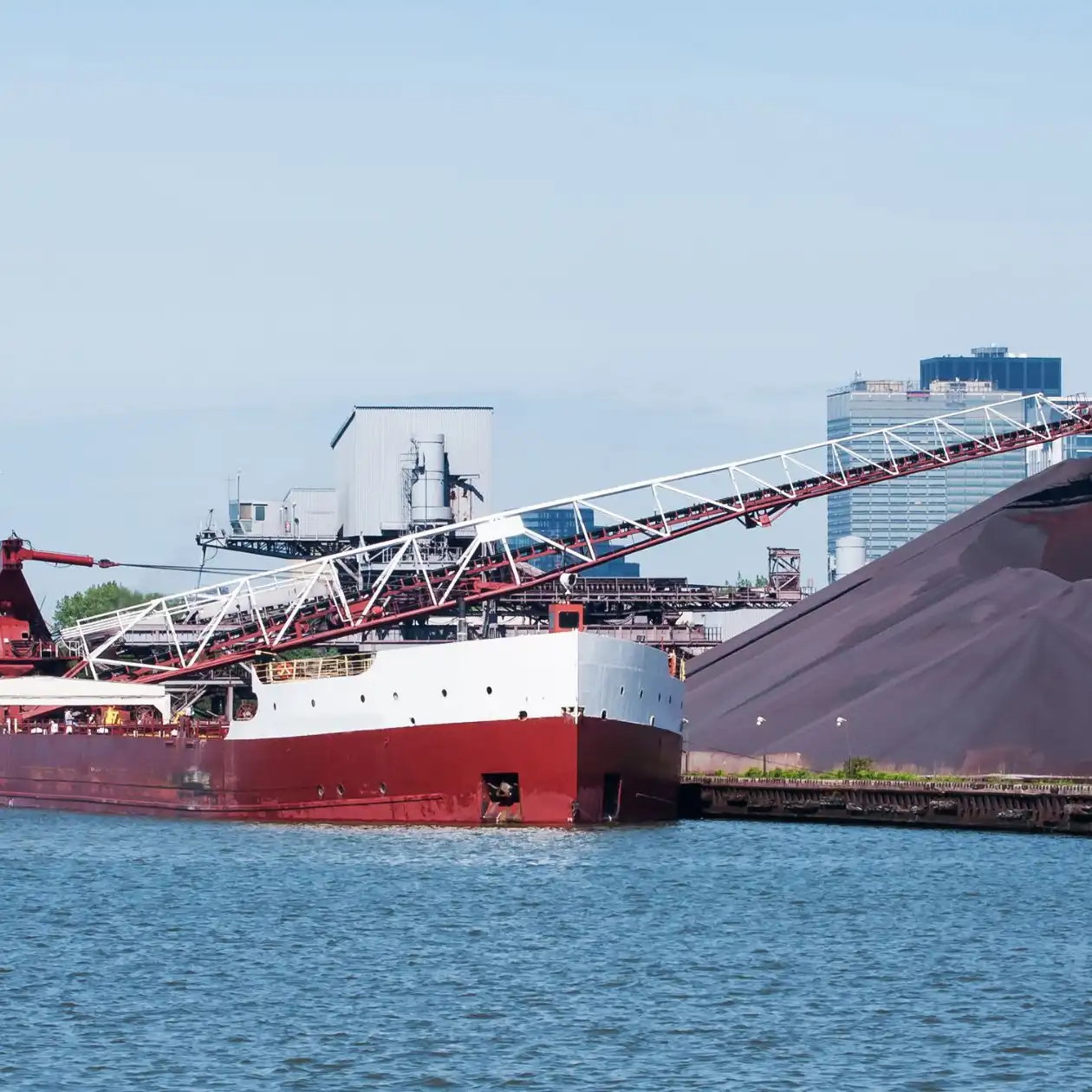
The fixture is on FIO because iron ore is loaded by shore conveyors and discharged by grab and shore cranes. Laytime is set at 96 hours total, SHINC (Sundays and holidays included), with demurrage of USD 38,000 per day to reflect the Capesize daily operating cost plus opportunity. The 10 day laycan window gives owner enough slack to position from a Pacific previous voyage without bunkering twice.
Freight is prepaid because the receiver is unrated. The bill of lading is claused to that effect, and the owner’s P and I club has approved the wording in advance.
Common mistakes and misuse
- Assuming laytime is automatically reversible. It is not. Reversible laytime, where time saved at the load port can be added at the discharge port, must be expressly stated in the charter party. Missing this exposes the charterer to demurrage at one end even when they saved time at the other.
- Treating bunker as included when the form is FIO. FIO governs cargo operations, not bunker. The owner always pays bunker on a voyage charter unless the contract is mislabelled and is actually a time charter.
- Missing the cancelling date because of a tight laycan. The cancelling date is the charterer’s option to walk away if the vessel is not in load-port readiness. A laycan window narrower than three days on a long ballast leg is high risk in a volatile market.
- Failing to align the freight clause with the bill of lading. Releasing a freight-collect bill when the charter party says freight prepaid breaks the owner’s lien.
- Quoting demurrage too low. Demurrage at half the spot TCE turns the charterer’s port congestion into the owner’s loss. The benchmark is to set demurrage at or above the daily TCE the vessel could earn in the next voyage.
- Forgetting to state which laytime regime applies. Weather working days, weather working days SHINC, and running days produce materially different demurrage outcomes on the same statement of facts.
When a voyage charter is the right choice
A voyage charter is the right instrument when the buyer or seller has a single cargo to move and no appetite for fuel, port-cost or schedule risk. It is also the right instrument when the spot market is volatile and the charterer does not want to commit to a period rate that could be wrong by 30 pct within a quarter. For programme cargo where five or more lifts are planned over twelve months, a contract of affreightment or a time charter usually beats the cumulative voyage cost.
Charterers who run repetitive lanes but lack desk capacity for operational management often combine a voyage estimate with a brokered fixture: the broker handles the recap, the owner handles the voyage, and the desk sees one freight invoice. If your desk is still triangulating whether voyage, COA or time charter is the right fit for the next twelve months, the ship-brokering team can model the three options against your stem schedule.
Scope and what this page does not cover
This page explains the voyage charter as a commercial instrument in dry bulk. It does not draft clause-by-clause GENCON amendments, opine on jurisdiction-specific case law on demurrage time bars, or forecast voyage rates for any specific lane. For those, work with chartering counsel and a desk-side broker against current Baltic Exchange data. To move a single parcel on a voyage charter with the freight, laytime and demurrage terms negotiated for you, get a quote.