What is a spot charter?
A spot charter is a single-voyage fixture concluded at the prevailing market freight rate for prompt or near-prompt loading, where neither party commits to a longer programme and the price is benchmarked against published Baltic Exchange indices for the lane.
Spot is a market, not a separate form of contract. A spot fixture is almost always documented as a voyage charter on a GENCON-family form, but the defining feature is the timing: the cargo is current and the rate is set against today’s spot index, not against a period agreement that was struck weeks or months earlier. The Baltic Exchange publishes daily reference rates such as C3 (Tubarao to Qingdao Capesize) and C5 (West Australia to Qingdao Capesize) that anchor spot negotiations in the dry bulk segment.
Spot exists because cargo flow is lumpy and so is vessel positioning. A charterer with one promptly available cargo and an owner with one prompt position can clear the market in a matter of hours. The price discovery is rapid, the commitment is short, and the entire transaction lives or dies on whether the rate is competitive against what brokers report on the chartering negotiations screen that day.
How a spot charter works in practice
The cargo order is circulated by a charterer through one or more brokers, usually with a tight laycan inside the next two to three weeks. Owners with vessels open in the load area respond with rate offers. The broker normalises the bids against the relevant Baltic index, the charterer counters, and the fixture concludes when a single owner clears the cargo at an acceptable rate. The whole cycle, from cargo order to recap, is often complete inside 24 to 48 hours for a Capesize or Panamax. The mechanics are the same as a voyage charter, executed at speed.
The owner pays bunker, port costs and crew on a spot voyage, exactly as on any other voyage charter. The charterer pays freight at the rate fixed at the moment of fixture, even if the spot market moves 20 pct against them between fixture and load. The freight rate is normally quoted in USD per tonne, settled on bill of lading quantity. See freight rate for how the per-tonne quote is built up from TCE expectations and bunker cost. A spot cargo with an uncertain stowage factor, such as mixed scrap, is occasionally fixed as a lump-sum charter instead, trading the per-tonne rate for a fixed total sum.
Performance is monitored exactly as on any voyage charter: notice of readiness, laytime, statement of facts, demurrage on overrun. The difference is that on a spot fixture, the laycan is tight, the cancelling clause is live, and any slippage on the ballast leg can blow the deal. Owner brokers price that risk into the rate.
| Cost or risk axis | Owner exposure | Charterer exposure |
|---|---|---|
| Bunker | Owner | None |
| Port costs and disbursements | Owner | None |
| Canal dues and towage | Owner | None unless agreed deviation |
| Off-hire | Not applicable (no hire) | Not applicable |
| Demurrage and despatch | Owner pays despatch | Charterer pays demurrage on laytime overrun |
| Weather and routing | Owner (route is owner's election) | None |
| Cargo claims | Owner (Hague-Visby liabilities) | None |
| Crew | Owner | None |
| Maintenance | Owner | None |
Spot charter vs time charter
The spot versus time question is not about the contract form, it is about commitment horizon. A spot fixture is a one-voyage commitment at today’s rate. A time charter is a multi-month or multi-year commitment at a daily rate. Spot exposes the charterer to freight volatility. Time exposes the charterer to the wrong rate locked in for the wrong duration.
| Spot charter | Time charter | Contract of affreightment | |
|---|---|---|---|
| Who runs the voyage | Owner | Charterer | Owner per nomination |
| Who pays bunker | Owner | Charterer | Owner |
| Who pays port costs | Owner | Charterer | Owner |
| Hire or freight basis | USD per tonne, spot index | USD per day | USD per tonne, agreed at COA signing |
| Cargo risk | Owner (Hague-Visby) | Charterer | Owner |
| Time risk | Owner outside laytime | Charterer | Owner per voyage |
| Typical duration | One voyage | Months to years | 12 to 36 months of lifts |
| Best for | One lift, current rate | Programme cargo, fleet control | Repeat lifts, rate certainty |
Use spot when the cargo is one-off, the lane is well covered by tonnage, and the desk wants to print today’s rate rather than commit to tomorrow’s. Use a time charter when the lift programme is dense enough that controlling a vessel for a quarter or longer is cheaper than fixing voyage-by-voyage and when the desk has the operational stack to run the ship. Use a contract of affreightment when the lifts are repeat but the desk does not want to take operational control: the COA prices the programme at a fixed per-tonne rate without putting the bunker bill on the charterer.
Risk allocation between owner and charterer
Because a spot fixture is documented as a voyage charter, the underlying risk split is identical to the voyage table above. The two pressure points that matter most on a spot deal are the cancelling clause and the demurrage rate.
The cancelling clause, typically GENCON 2022 clause 9, gives the charterer the right to walk if the vessel is not in load-port readiness by the cancelling date. On a tight spot laycan of three or four days, this clause is live: owners chasing the fixture often ballast hard against a marginal date, and a missed cancelling date can cost the owner the entire voyage revenue. Owners therefore price a laycan tightness premium into the spot rate, and brokers can usually quantify it against the relevant Baltic index.
The demurrage rate is the second pressure point. On spot, demurrage should reflect the vessel’s next-best TCE rather than its operating cost. Capesize TCE on the major iron ore lanes has ranged through the high teens to mid-thirties USD per day in recent quarters, and demurrage rates of USD 25,000 to 40,000 per day are typical. Setting demurrage too low effectively transfers congestion risk from charterer to owner with no compensation. The Baltic Exchange and INTERCARGO commentary track the headline TCE band and provide the desk’s benchmark.
Worked fixture example
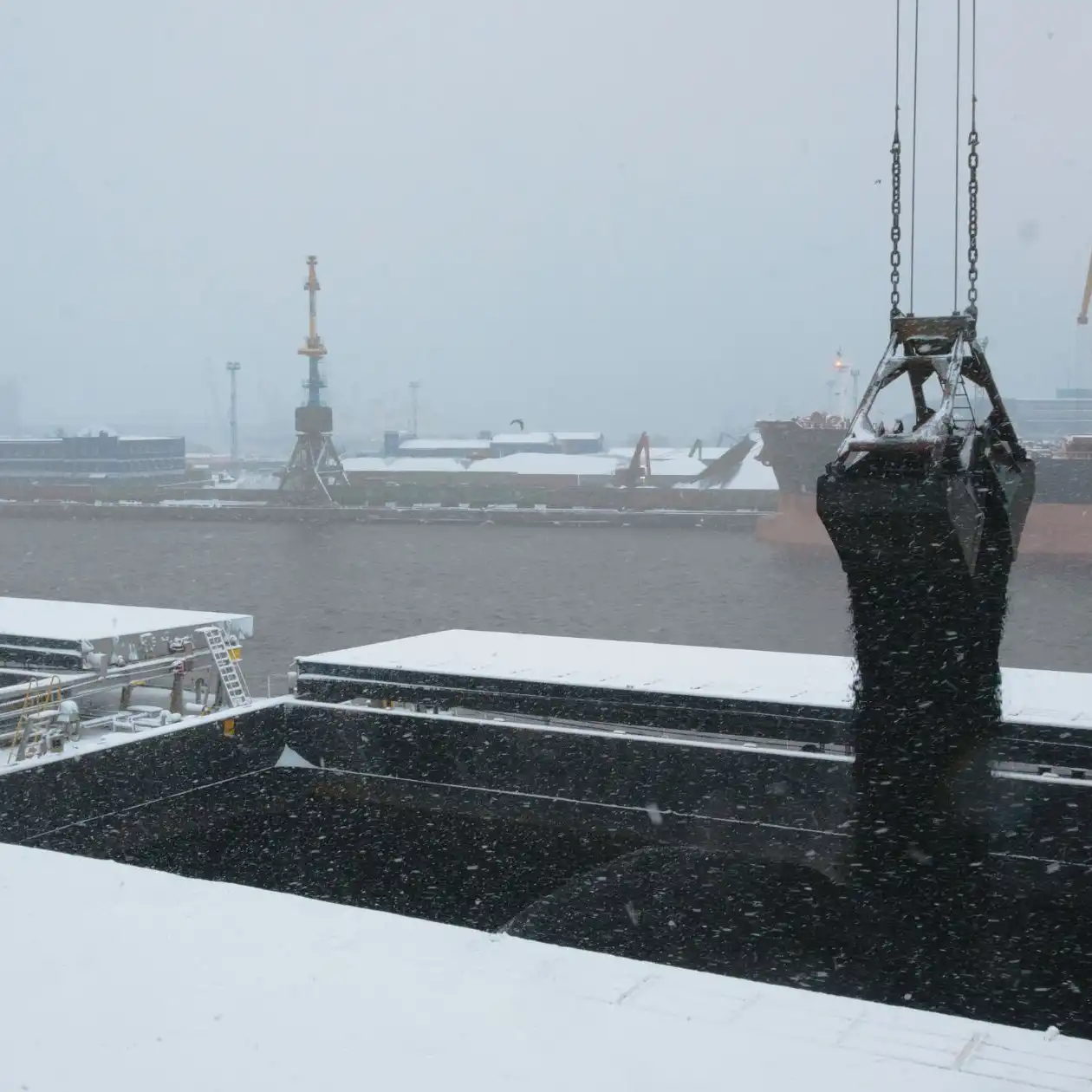
Panamax Australian coal, prompt spot fixture
- Cargo
- 75,000 mt thermal coal, 5 pct molo
- Lane
- Newcastle region to South Korea east coast
- Parcel size
- 75,000 mt
- Laycan
- March 2026, 5 day window
- Freight rate
- USD 11.80 per tonne
- Demurrage
- USD 22,000 per day, pro rata
- Key clauses
- GENCON 2022, FIO, 72 hours total laytime SHINC, BL freight prepaid
The lane runs around 4,800 nautical miles one way. At a freight rate of USD 11.80 per tonne on a 75,000 tonne stem, gross revenue is around USD 885,000. Net of bunker (roughly 1,200 mt round trip), port costs and canal-free routing, owner’s TCE equivalent sits in the high teens USD per day for a modern Panamax in March 2026, broadly consistent with Baltic Exchange Panamax basket levels for the period.
The 5 day laycan window reflects the spot character of the deal. The vessel was open in North China after a previous fixture, and the ballast to Newcastle was tight against the cancelling date. Owner accepted the laycan in exchange for a small premium on the index-implied rate.
Demurrage at USD 22,000 per day is set deliberately above operating cost to cover the owner’s opportunity if the discharge port congests. Freight is prepaid because the receiver was a trading house with limited credit history with the owner.
Common mistakes and misuse
- Treating spot as if it were a separate contract form. It is a voyage charter executed at prompt rates; the same GENCON clauses apply, and any tweaks the desk wants must be negotiated into the recap.
- Quoting against the wrong Baltic index. C3 prices iron ore Brazil to China. Quoting a thermal coal Newcastle to Korea cargo against C3 gives nonsense numbers. The desk must match the cargo and lane to the right index basket.
- Ignoring cancelling-date risk on tight ballasts. A four-day laycan after a 6,000 nautical mile ballast leg is a coin flip on weather and bunker availability; owners pricing this should add a tightness premium and charterers should consider widening the window.
- Forgetting that spot rates move intraday. The recap captures the rate at the moment of fixture, but the Baltic indices can move 5 to 10 pct in a single trading day. Failing to confirm the rate against the closing index can leave money on the table or fix above market.
- Underpricing demurrage. Setting demurrage at vessel operating cost gives no compensation for the opportunity loss when a discharge port congests; benchmark demurrage against the next-best TCE.
- Skipping the voyage estimate. A spot rate that looks competitive on the per-tonne line can lose money once bunker and canal dues are properly modelled. A two-line voyage estimate is the minimum cross-check before fixing.
When a spot charter is the right choice
Spot is the right answer when the cargo is one parcel, the desk wants to crystallise today’s rate, and there is no longer-term programme to protect. It is also the right answer when the Baltic indices are trending in the charterer’s favour and locking in a period rate would mean over-paying. A charterer running ten lifts a year on the same lane will usually find a contract of affreightment or even a consecutive voyages structure cheaper across the cycle than ten separate spot fixtures.
For desks that lift cargo occasionally but do not have a chartering function, spot is also the right surface to outsource: the ship-brokering team can run the spot fixture end-to-end, from cargo order to recap, against the current Baltic basket.
Scope and what this page does not cover
This page explains the spot charter as a market segment and how a spot fixture clears. It does not forecast freight rates for any lane, opine on Baltic Exchange index methodology, or substitute for desk-side broker quotes against current market. For specific rate guidance and live indications, work with a broker against today’s Baltic data. To clear a prompt cargo on the spot market against the current index, get a quote and the desk will run the fixture from cargo order to recap.