What is sugar as a sea-borne cargo?
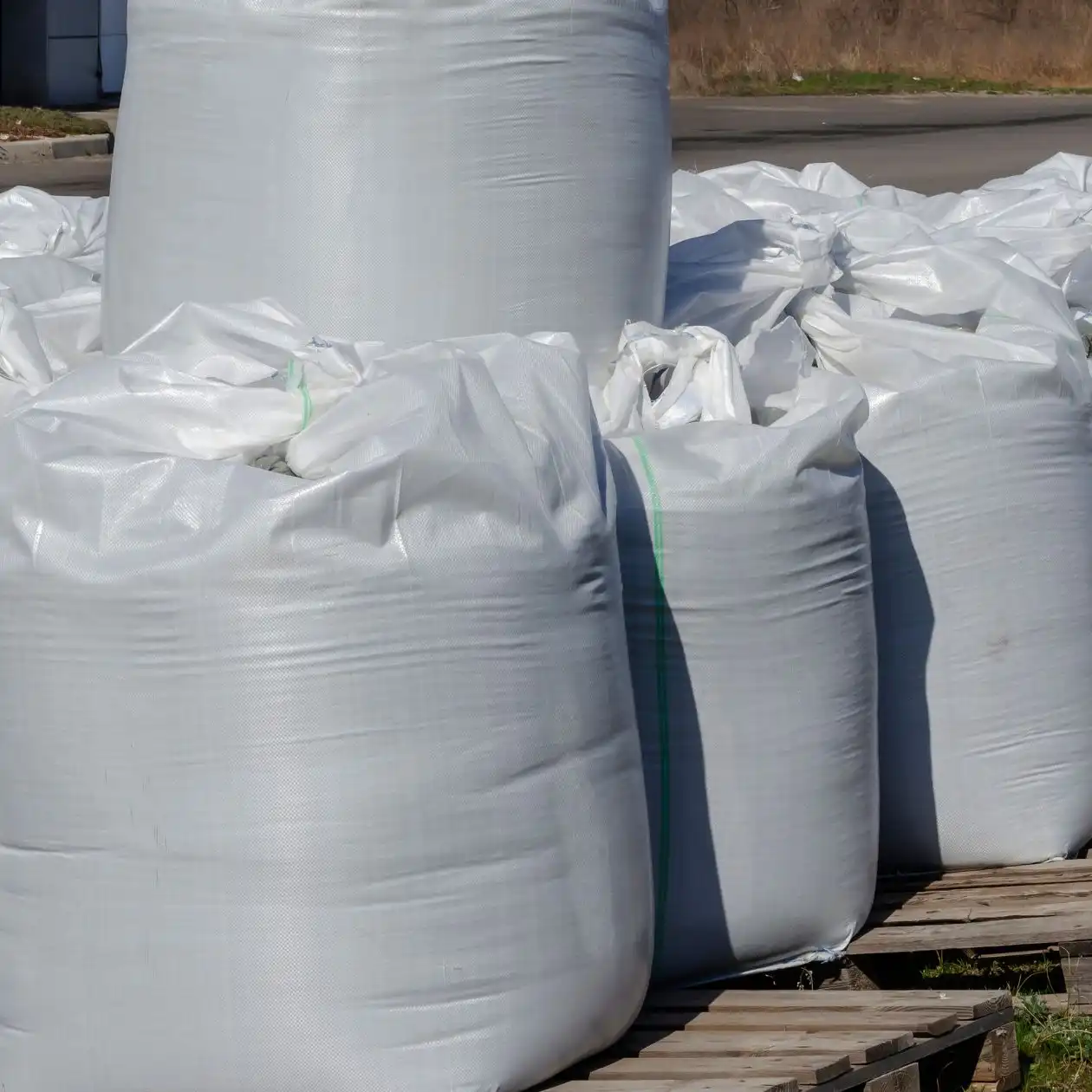
Sugar is a food-grade granular bulk cargo, traded sea-borne in two principal forms. Raw cane sugar, exported mainly from Brazil, Thailand, Australia, and India, is the volume-dominant form. Refined white sugar, both granular and crystal, moves on smaller parcels into receivers without local refining capacity.
Raw sugar in bulk is typically VHP, very high polarisation, around 99.3 to 99.7 degrees, in light brown crystalline form. It loads dry, flows freely under shore conveyors, and stows tighter than grain at roughly 1.10 to 1.30 m3 per tonne. Refined sugar stows similarly and demands stricter cleanliness because there is no downstream refining to remove contamination.
The IMSBC Code 2024 lists separate schedule entries for SUGAR (raw) and SUGAR (refined). Both sit in Group C, meaning the cargo is neither liable to liquefy nor chemically hazardous in the IMSBC sense. The operational risks are food safety, moisture ingress, contamination from prior cargoes, and the polarisation grade declared on the shipper’s certificate against what the discharge surveyor finds in the hold.
Sugar cargo properties
| Property | Value | Unit / Reference |
|---|---|---|
| Stowage factor (raw VHP) | 1.10 to 1.25 | m3/t |
| Stowage factor (refined) | 1.15 to 1.30 | m3/t |
| Bulk density (raw) | 0.85 to 0.95 | t/m3 |
| Bulk density (refined) | 0.80 to 0.88 | t/m3 |
| Angle of repose | 25 to 35 | degrees |
| IMSBC group | C | Not liable to liquefy, not chemically hazardous |
| IMSBC schedule (raw) | SUGAR (raw) | IMSBC Code 2024 |
| IMSBC schedule (refined) | SUGAR (refined) | IMSBC Code 2024 |
| Transportable moisture limit | Not applicable | Group C cargo |
| Hazard class | Not applicable | Hygroscopic, prone to moisture and biological damage |
| Polarisation (raw VHP) | 99.3 to 99.7 | degrees |
| Polarisation (refined) | Greater than 99.8 | degrees |
Sugar is hygroscopic. It absorbs ambient moisture from humid hold air, which causes crystals to clump and, in extreme cases, to harden into a partly solid mass that resists shore grabs at discharge. Moisture control is therefore the defining operational concern, not stability.
Vessel typing and parcel sizes
| Vessel class | Suitability | Typical parcel size | Notes |
|---|---|---|---|
| Capesize | Used for very large raw stems out of Brazil to Asia. | 85,000 to 130,000 t | Limited receiver capacity at this size. Most sugar moves on smaller tonnage. |
| Panamax | Strong fit for the Brazil and Thailand long-haul trades. | 45,000 to 65,000 t | Standard for raw sugar to Chinese, Indonesian, and Bangladeshi receivers. Clean holds and prior-cargo declaration are the gates. |
| Supramax | Workhorse for regional sugar lanes. | 30,000 to 55,000 t | Geared tonnage handles smaller receivers without shore cranes. Frequent on India, Australia, and US Gulf lanes. |
| Handysize | Used for refined sugar parcels and smaller receivers. | 12,000 to 35,000 t | Geared. The fit for African and Caribbean refined sugar imports and for split-parcel raw sugar. |
Hold cleanliness is the dominant gate, even more strictly enforced than for grain. Sugar receivers require holds to pass a food-grade survey, and the prior cargo declaration is scrutinised. Cargoes that immediately precede sugar must not leave residue that compromises food safety. Compatible prior cargoes are typically rice, other sugar, or thoroughly washed grain holds. See Supramax and Handysize for the geared classes that handle most regional sugar lanes.
How sugar ships in practice
Hold preparation begins with a hard washdown and a full dry-out, followed by a third-party food-grade inspection nominated by the receivers or shipper. The prior cargo declaration is critical. Charterers often refuse to nominate a vessel that has recently carried sulphur, cement, fertilizer, or coal without a documented multi-stage cleaning regime in between.
Loading is straightforward in mechanical terms. Shore conveyors and trippers deposit raw sugar into the holds in even layers, with care taken to prevent piling against bulkheads and to keep the cargo away from condensation-prone overhead surfaces. The shipper issues a polarisation certificate that becomes the contractual reference for cargo quality, alongside the bill of lading.
Voyage care is about ventilation. The master ventilates holds when the ambient dew point is below the cargo temperature, and seals them when it is above, to prevent ship-sweat condensing onto the cargo. This is the same dew-point rule used for grain but applied with closer attention.
At discharge, holds are opened, surveyed for moisture and clumping, and worked by shore grabs into ground hoppers. Refined sugar is more sensitive to mechanical handling than raw, and discharge equipment is matched accordingly. Final survey settles polarisation, moisture, and shortage claims against the load-port certificate. See demurrage and notice of readiness for the time-counting and tendering mechanics most sugar fixtures apply.
Major trade routes
Brazil dominates sea-borne raw sugar volume on a structural basis. Thailand, India, and Australia provide the alternative origins, with Brazilian export volume swinging with the cane harvest and the domestic ethanol balance.
- Brazil to East and Southeast Asia. Raw VHP sugar on Panamax and the occasional Capesize. Santos and Paranagua to China, Indonesia, Bangladesh, Malaysia, and Vietnam.
- Brazil to West and North Africa. Raw sugar on Panamax and Supramax. Santos to Algeria, Morocco, Nigeria, and the Gulf of Guinea cluster.
- Thailand to China. Raw sugar on Supramax and Panamax. Bangkok and Sriracha to southern Chinese receivers, peaking in the post-harvest window.
- India to Indonesia and Bangladesh. Raw and refined sugar on Supramax and Handysize. Krishnapatnam, Tuticorin, and Kandla to nearby South Asian receivers.
- Australia to East Asia. Raw sugar on Supramax. Mackay, Townsville, and Lucinda to Japanese, South Korean, and Indonesian refiners.
- US Gulf to the Caribbean. Refined sugar on Handysize. Smaller parcels for island receivers without local refining capacity.
Sugar vs grain
Sugar and grain are both food-grade cargoes that demand clean holds and run on the same Panamax, Supramax, and Handysize fleet. The differences are about handling sensitivity and the regulatory regime.
| Attribute | Sugar | Grain |
|---|---|---|
| Stowage factor | 1.10 to 1.30 m3/t | 1.30 to 1.50 m3/t |
| Stability regime | IMSBC Code only | IMO International Grain Code, mandatory under SOLAS |
| Hold standard | Food-grade, with strict prior-cargo declaration | Food-grade, FOSFA or equivalent |
| Shipper certificate | Polarisation certificate, ICUMSA colour, moisture | Grain code certificate, moisture, test weight |
| Fumigation | Not typical | Routine in transit, phosphine |
| Hygroscopic risk | High, drives sealed-hold ventilation discipline | Moderate, drives moisture surveys |
| Parcel size | 30,000 to 65,000 t typical | 25,000 to 75,000 t typical, larger on Brazil and US Gulf stems |
Select grain when the cargo is cereal seed and the focus is bushel weight, fumigation, and the grain code stability paperwork. Select sugar when the cargo is granular and dense, and the focus shifts to polarisation, prior cargo, and moisture-driven discharge complications. See grain shipping for the parallel page and the stowage factor reference for the cube and density mechanics that anchor parcel-size planning.
Reference example
Supramax Raw Sugar, Brazil to West Africa
- Cargo
- Raw cane sugar VHP, 99.5 degrees polarisation
- Lane
- Santos region to West Africa
- Vessel band
- Supramax, 58,000 dwt class, geared
- Parcel size
- 50,000 t, 5 percent more or less in owners option
- Load rate
- 10,000 t per weather working day
- Discharge rate
- 3,500 t per weather working day, shore grabs and ship gear combined
- Laytime
- Total laytime, both ends
- Charter party form
- SUGAR CHARTER PARTY 1999
- Notable clause
- Hold pass survey at load port mandatory before NOR is accepted. Polarisation certificate from independent surveyor at load port. Prior cargo declaration covering the three immediately preceding voyages.
The fixture above is anonymised. It illustrates the dominant Brazil-origin Supramax pattern, with the hold pass survey, the polarisation certificate, and the three-voyage prior cargo declaration as the gating operational requirements.
Common loading and discharge issues
- Prior cargo contamination flagged at the food survey, where residues from coal, cement, sulphur, or fertilizer disqualify the hold and force re-cleaning before loading can begin.
- Discharge tail contamination, where sweepings and residue at the bottom of the hold mix with rust, paint, or other foreign matter and the receiver claims against the final tonnage.
- Polarisation dispute between the shipper’s load-port certificate and the receiver’s discharge sample, which becomes a price adjustment under the sale contract and pulls the vessel into the documentary dispute.
- Moisture clumping in transit, especially on long Brazil to Asia voyages, where humid hold air and inadequate ventilation produce a partly hardened cargo surface that resists shore grabs.
- Rain interruption at the load berth on Brazilian and Thai terminals, where open-air conveyor loading is suspended on the first sign of rain and laytime stops.
- ICUMSA colour deviation. The shipper-declared colour does not match the discharge sample, with consequences for the refining yield at the receiver.
Scope and what this page does not cover
This page is an operational and cargo-spec briefing on sea-borne sugar. It does not publish sugar price forecasts, it does not track ICE No. 11 or No. 5 futures, and it does not offer broker-desk opinion on individual sugar fixtures. Jurisdiction-specific contract law, especially under Refined Sugar Association or sugar charter party arbitration, is outside the scope of this page and should be referred to qualified maritime counsel. To move a raw or refined sugar parcel, get a quote; for commercial pricing and current fixture flow, contact the ship brokering desk directly.