What is a Handysize bulk carrier?
A Handysize is the smallest ocean-going geared bulk carrier class, typically 28,000 to 40,000 deadweight tonnes, named for its handy size and port flexibility. It serves the ports and trade lanes no larger vessel can reach economically.
Clarksons Handysize fleet data shows steady newbuild ordering at the 38,000 to 40,000 t eco-design upper end of the band. Modern Handysize is the new-build standard for the class. Older sources stretch the band to 10,000 to 50,000 t with overlap into the small coaster fleet at the lower end and the Handymax fleet at the upper. The contemporary tight definition is 28,000 to 40,000 t, geared with 4 x 25 to 30 t cranes, five-hold and five-hatch configuration, with a draught of 9.5 to 10.5 m.
The class earns its name on port flexibility. Where a Supramax draught of 12.0 m blocks the vessel from many regional ports, the Handysize at 10.0 m can enter shallow-water terminals, river ports, intra-Caribbean trades, intra-Mediterranean trades, and feeder lanes that supply major bulk hubs. The Baltic Handysize Time Charter Index (BHSI) is the published benchmark for the class.
Handysize specifications
| Specification | Value | Source |
|---|---|---|
| DWT range | 28,000 to 40,000 t (modern newbuild 38,000 to 40,000 t) | Clarksons Handysize fleet data; Lloyd's Register class data |
| LOA | 150 to 180 m | Clarksons fleet data |
| Beam | 23 to 28 m | Clarksons fleet data |
| Draught (summer) | 9.5 to 10.5 m | Lloyd's Register class data, load-line assignment |
| Holds | 5 | Standard Handysize design |
| Hatches | 5 | Standard Handysize design |
| Gear configuration | Geared, 4 x 25 to 30 t SWL cranes (modern builds 30 t standard) | Clarksons fleet data; Pacific Basin fleet specifications |
| Cubic capacity | 40,000 to 50,000 m3 (grain) | Clarksons fleet data |
| Service speed (laden) | 13 to 14 kn | Clarksons fleet data |
| Service speed (ballast) | 13 to 14 kn | Clarksons fleet data |
| Typical cargoes | Grain, cement, fertilizer, steel coils, sugar, project cargo, break-bulk | BHSI route basket; major operator trade reports |
| Benchmark index | Baltic Handysize Time Charter Index (BHSI) | Baltic Exchange |
Ultramax, not Handysize, is the most-renewed class in the geared mid-size segment: Ultramax carries a 28.6% orderbook-to-fleet ratio with only 1.3% of its tonnage over 16 years old, versus Handysize’s 10.7% orderbook ratio and 27.3% of tonnage over 16 years old, per Xclusiv Shipbrokers data reported by Riviera Maritime Media (February 2025). Modern eco-Handysize of 38,000 to 40,000 DWT is the newbuild standard, with electronically-controlled main engines, Tier III NOx compliance, and ballast-water treatment system (BWTS) fitted. The lower-end of the band (28,000 to 35,000 t) is dominated by older tonnage and is the band that transitions into the small-coaster fleet at the smaller end. Some older sources still cite a 10,000 to 50,000 t Handysize range; for contemporary fixture and broker terms, 28,000 to 40,000 t is the working definition.
Handysize vs adjacent classes
| Class | DWT band | Port accessibility | Dominant trades / lanes | Hire rate range (USD/day) |
|---|---|---|---|---|
| Handysize | 28,000 to 40,000 t | Greatest port flexibility, geared 4 x 25 to 30 t. Draught 9.5 to 10.5 m. | Feeder, intra-regional, break-bulk, project cargo, river-port lanes | 8,000 to 12,000 (mid-cycle, BHSI) |
| Handymax | 40,000 to 50,000 t | Strong port reach, geared 4 x 25 to 30 t. Draught 11.0 to 12.0 m. | Regional and intra-basin lanes, older fleet niches | 9,000 to 13,000 (mid-cycle) |
| Supramax | 50,000 to 60,000 t | Most worldwide bulk ports, geared 4 x 30 to 35 t. Draught 12.0 to 12.5 m. | Intra-Asia coal, ECSA grain, US Gulf grain, NW Europe to W Africa | 11,000 to 16,000 (mid-cycle, S10TC) |
Selection between Handysize and Handymax is driven by port draught restriction and parcel size. Charterers loading into ports with 10 m or shallower draught restriction (much of the Caribbean, parts of the Mediterranean, many West African receivers, river-feeder ports) have no choice but Handysize. Charterers loading parcels under 35,000 t similarly fix Handysize because the larger vessel arrives part-empty and the lay-time and port economics degrade. Above 35,000 t parcel and 11 m port draught, the choice opens up to Handymax and Supramax.
The Supramax carries roughly 20,000 t more cargo on a draught 2 m deeper. Where the receiver has the draught and the parcel size is over 45,000 t, the Supramax wins on freight per tonne. Where the receiver is draught-restricted, parcel is small, or the lane is multi-port with short hauls, the Handysize wins on flexibility. See the Handymax, Supramax, and mini-bulker pages for the surrounding classes.
Port accessibility and trade lanes
The Handysize has the greatest port flexibility of any ocean-going bulk class. Draught of 9.5 to 10.5 m clears almost every commercial port that accepts dry-bulk cargo, including the river-feeder, intra-basin, and shallow-water terminals that exclude every larger class.
- Intra-Caribbean trades. Sugar from Cuba and Dominican Republic, cement from Mexico and Colombia, fertilizer between Caribbean basin ports, and break-bulk project cargo. Many Caribbean berths have 9 to 10 m draught limits that exclude Handymax.
- Intra-Mediterranean lanes. Cement, fertilizer, grain, and steel inside the basin. Short-haul, multi-port voyages favour the smaller vessel and gear configuration.
- River-feeder and shallow-water trades. Up-River Parana feeders into Brazilian and Argentinian deep-sea ports, Mississippi shallow-draught feeders, intra-Yangtze and Pearl River trades. Many of these lanes have draught restrictions of 9 to 10 m at intermediate ports.
- NW Europe and Baltic intra-regional. Grain, fertilizer, and steel between Baltic, North Sea, and Atlantic-coast European ports. Short-haul lanes where the Handysize lay-time and port economics outperform larger tonnage.
- West Africa receivers. Cement, fertilizer, steel, and project cargo into West African ports (Tema, Lagos, Lome, Cotonou, Dakar). Many West African berths have 9 to 11 m draught limits; geared configuration is essential where shore gear is unreliable.
- Pacific Islands and SE Asia feeder lanes. Cement, fertilizer, and break-bulk into Indonesian outer ports, Pacific Island receivers, and SE Asian feeder ports. Handysize is the workhorse of the South Pacific basin.
- Niche trades: break-bulk and project cargo. When the Handysize is combined with split-parcel arrangements (alongside Supramax or Handymax for split parcels) or carries steel coils and project cargo in semi-bulk configuration, the gear and hold flexibility shine.
Draught flexibility of 9.5 to 10.5 m and a beam of 23 to 28 m give the Handysize port reach that no other ocean-going bulk class matches.
Typical cargoes and parcel sizes
Handysize cargo diversity is the widest in the fleet, even though parcel sizes are the smallest. Typical parcel sizes by cargo type:
- Cement and clinker: 25,000 to 35,000 t parcels. The Handysize is the dominant class for intra-regional cement trades.
- Grain (soybeans, corn, wheat): 28,000 to 35,000 t parcels. Feeder and intra-regional grain trades, especially in the Caribbean, Mediterranean, and West Africa.
- Fertilizer (urea, DAP, potash, AN-based blends): 25,000 to 35,000 t parcels. Smaller fertilizer stems where AN-based product is deliberately split into smaller parcels for safety.
- Steel coils, rebar, plates: 15,000 to 30,000 t parcels, often as semi-bulk or break-bulk. The Handysize crane flexibility supports the loading and discharging of steel products at receivers without shore gear.
- Sugar (raw and refined): 25,000 to 35,000 t parcels. Caribbean origin and Brazilian feeder trades.
- Break-bulk and project cargo: 10,000 to 30,000 t parcels, including bagged cargo, sawn timber, machinery, and pipes. The geared configuration and box-shaped holds support irregular cargo.
- Bauxite and other minerals (smaller stems): 28,000 to 35,000 t parcels. Smaller receivers and short-haul intra-basin minerals.
The Handysize is frequently the vessel of choice when the cargo is small, the lane is multi-port, the receiver is shallow-draught, or the cargo type itself is irregular (break-bulk, project, bagged). The class is rarely a binding constraint on the lane.
Vessel profile
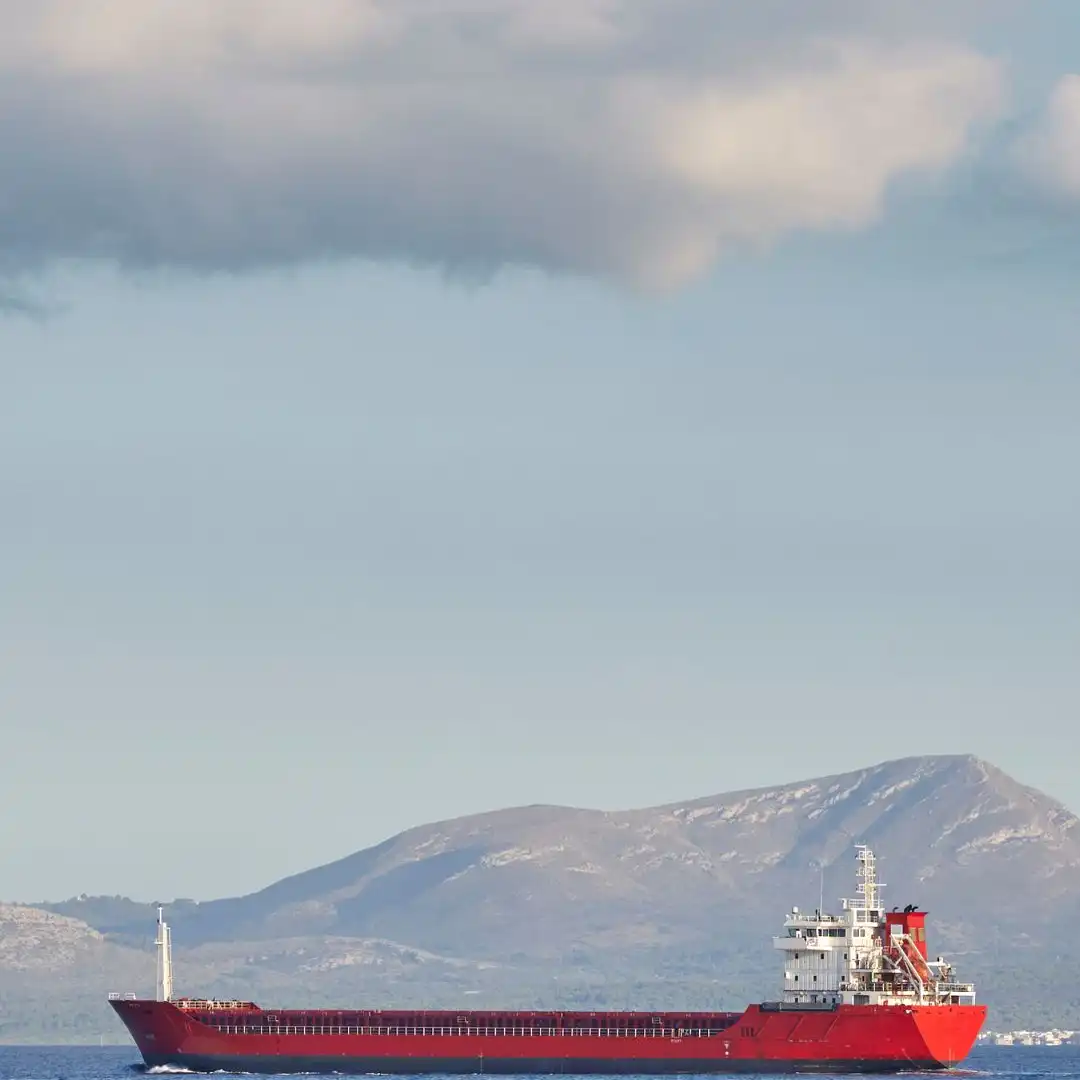
The Handysize profile is the most compact ocean-going bulk carrier. Five box-shaped holds run the length of the cargo block, each served by a single hatch with steel folding hatch covers. Four deck cranes (25 to 30 t SWL, with 30 t now standard on modern builds) sit between the hatches paired with grab buckets. The deckhouse and engine room sit at the stern. Modern eco-Handysize designs feature shorter, beamier hulls (LOA 175 to 180 m, beam 27 to 28 m) optimised for cargo cube on a 10.0 m draught, with electronically-controlled main engines and BWTS fitted as standard.
Reference example
Pacific Basin Handysize, modern eco-design
- Vessel name
- Representative Pacific Basin or Eastern Pacific Handysize (composite, see flag)
- IMO
- Composite, not a single vessel (verify against operator fleet register)
- Operator type
- Major Handysize operator (Pacific Basin, Eastern Pacific, Marubeni comparable)
- Year built
- 2018 to 2022 typical for modern eco-Handysize
- DWT
- 38,000 to 39,000 t
- LOA
- 179 m
- Beam
- 28 m
- Draught (summer)
- 10.0 m
- Gear
- 4 x 30 t SWL cranes with grab buckets
- Typical trade
- Pacific basin cement and fertilizer; intra-Asia grain and steel; multi-port feeder voyages
The fixture above is a representative composite, not a named individual vessel. The Pacific Basin / Eastern Pacific Handysize newbuild fleet is the contemporary benchmark for modern eco-design Handysize tonnage. The composite is flagged in desk-review for replacement with a named vessel and confirmed IMO if a specific recent fixture is available.
Common chartering considerations
- Port flexibility is the defining commercial premium. Charterers fixing into shallow-draught, multi-port, or geographically remote lanes have no real alternative to the Handysize. The premium over equivalent gearless tonnage and over Handymax is justified at fixture.
- Baltic Handysize Time Charter Index (BHSI) is the benchmark. The BHSI publishes a daily average of representative time-charter routes. Charterers and owners reference the BHSI for time-charter equivalent (TCE) calculations and index-linked fixtures.
- Broker market depth is strong. The Handysize fleet is the most fragmented in the geared segment by ownership, with many mid-size and regional operators holding 5 to 50 vessels. Broker desks across the major maritime centres maintain active Handysize coverage.
- Fuel consumption is around 16 to 19 t per day at service speed. Modern eco-Handysize with electronically-controlled main engines achieves the lower end of the range. Older Handysize tonnage consumes 18 to 21 t per day. The fuel-per-tonne-mile economics are competitive with Supramax on short hauls and degrade on long hauls.
- Feeder, break-bulk, and project cargo niches. Handysize fixtures often combine bulk and break-bulk on the same voyage, especially in the Caribbean, West Africa, and Pacific basin. Charter-party clauses on cargo description, lay-time, and gear use are critical and frequently negotiated.
- Time-charter, trip-charter, and voyage-charter all common. See the voyage charter, trip charter, and time charter pages for the contract structures used in the class. The trip-charter form is especially common on Handysize feeder voyages.
For the brokering-desk context on Handysize employment, sale, and purchase, contact the ship brokering team.
Scope and what this page does not cover
This page is an operational and vessel-spec briefing on the Handysize class. It does not publish daily BHSI levels, it does not forecast hire rates, and it does not offer broker-desk opinion on individual Handysize fixtures or newbuild orderbook decisions. Class-society and flag-state certification detail, regulatory compliance for individual vessels, and Memorandum of Agreement (MOA) terms for second-hand sales are outside the scope of this page. For commercial advice on Handysize employment, charter, or sale and purchase, see the bulk-carriers hub, the vessel specifications reference, and the size comparison page. For a shallow-draught, multi-port or break-bulk parcel that needs the Handysize’s flexibility, get a quote and the desk will fix it.