What is a VLOC?
A VLOC, or Very Large Ore Carrier, is a dry bulk carrier of roughly 200,000 to 400,000 DWT built almost exclusively to move iron ore. The class sits above Capesize at the very top of the bulk-carrier fleet, and the best-known units are the Valemax ships of about 400,000 DWT, the largest bulk carriers ever built.
The VLOC is a commercial and operational label rather than a regulatory one. There is no IMO definition of a VLOC; what marks a vessel as one is that her deadweight, beam and draught place her above the standard Capesize band and confine her to the handful of deep-water ore terminals that can load and discharge her. Where a Capesize is a flexible workhorse that trades iron ore, coal and bauxite across many lanes, a VLOC is a single-purpose machine. She lifts iron ore between a small set of dedicated export berths and a small set of deep-water receivers, almost always under a long-term contract of affreightment rather than on the open spot market.
The class exists because of cargo density. Iron ore is heavy enough that a hull this large still hits its deadweight limit before it runs out of hold volume, so the economics of scale work cleanly. The Valemax programme, commissioned around Vale’s Brazil to China ore exports, was the project that pushed the upper boundary of the class to about 400,000 DWT.
VLOC specifications
| Specification | Value | Source |
|---|---|---|
| DWT range | 200,000 to 400,000 t (Valemax at ~400,000 t) | Clarksons Research ore-carrier fleet data |
| LOA | 320 to 362 m | Lloyd's Register class data, Valemax at ~362m |
| Beam | 55 to 65 m | DNV class data, Valemax beam ~65m |
| Draught at summer load line | 21 to 23 m | Lloyd's Register class data |
| Hold count | 7 to 9 | ABS structural standard, Valemax typically 7 holds |
| Hatch count | 7 to 9 | Matches hold count, single hatch per hold |
| Gear configuration | Gearless | |
| Cubic capacity | ~210,000 to 230,000 m3 | Grain cubic, Valemax fleet average |
| Speed laden / ballast | 13 to 15 / 14 to 16 knots | Slow-steaming profile, Clarksons fleet data |
| Typical cargoes | Iron ore | Clarksons trade-flow data |
The VLOC band overlaps the upper Capesize sub-classes at the bottom and runs well clear of them at the top. Below about 200,000 DWT a vessel reads as Post-Capesize or Newcastlemax rather than VLOC. The label firms up in the 250,000 DWT and above range, and the Valemax fleet at roughly 400,000 DWT defines the ceiling. These are the largest dry bulk carriers in service.
VLOC vs Capesize
| Class | DWT band | Port accessibility | Dominant trades / lanes | Hire / freight basis |
|---|---|---|---|---|
| VLOC | 200,000 to 400,000 t | Dedicated deep-water ore terminals only; Tubarao, Ponta da Madeira, Qingdao, Caofeidian, Dongjiakou | Brazil to China iron ore (Valemax programme) | Long-term COA |
| Capesize | 150,000 to 180,000 t | Major ore and coal terminals; excluded from Panama and most Suez | Australia-China iron ore, Brazil-China iron ore, coal, bauxite | Spot against Baltic Capesize Index; 15,000 to 35,000 USD/day mid-cycle |
Use a Capesize when the parcel is 150,000 to 180,000 t, the lane runs between major ore or coal terminals, and you want to trade on the open spot market against the Baltic Capesize Index. The Capesize is flexible: she can switch between iron ore, coal and bauxite, and a far larger set of ports can take her draught.
Use a VLOC when the cargo is iron ore, the parcel is well above 200,000 t, the load and discharge ports are deep-water ore terminals, and the contract is long-term. The VLOC is not a spot-market substitute for a Capesize. The Valemax structure was built around the Brazil to China programme, and the class only makes economic sense where the cargo volume and the dedicated terminal infrastructure both justify the size.
No public VLOC-specific spot earnings series exists, since VLOC tonnage runs almost entirely on long-term Vale contracts of affreightment rather than the open market. As an illustrative proxy only, the Baltic Exchange C5TC Capesize index has recently ranged from roughly $33,000 to $35,000/day (Baird Maritime, July 2026) up to about $45,000/day at the end of 2025, figures that describe Capesize earnings, not a sourced VLOC rate.
Port accessibility and trade lanes
The VLOC lane structure is governed by an even smaller set of terminals than the Capesize, because only a few berths on each side of the trade can take her draught and her parcel size.
- Tubarao, Brazil: Vale’s main Atlantic iron ore export complex near Vitoria. A primary Valemax load port with draught capability above 23m at the loaded lines.
- Ponta da Madeira, Brazil: Vale’s northern export terminal serving the Carajas mine system. The other primary Valemax load port, deep enough for fully laden VLOC departure.
- Qingdao, China: Tier-one Chinese ore receiver with deep ore berths able to take VLOC draught. A core Valemax discharge port.
- Caofeidian, China: Deep-water ore terminal north of the Bohai with berths handling around 23m draught, sized for the largest ore carriers.
- Dongjiakou (Qingdao Port), China: Purpose-built deep-water ore facility developed in part to handle Valemax tonnage, with dedicated 400,000 DWT-class berths.
Draught at the receiver is the binding constraint on whether a VLOC can deliver a cargo in one parcel. Where a deep-water ore berth is not available, the cargo must move on Capesize tonnage instead, often with transshipment. The bulk-carriers hub carries the full vessel-class catalogue, and the specifications and size-comparison pages set the VLOC against the rest of the fleet.
Typical cargoes and parcel sizes
VLOC parcel economics are dominated by one fact: the class carries a single dense cargo and reaches its deadweight limit before its hold volume.
- Iron ore: the near-total cargo of the class. A Valemax lifts roughly 380,000 to 400,000 t of iron ore in a single parcel on the Brazil to China lane, with smaller VLOCs at 200,000 to 320,000 t. See iron ore for the cargo-side analysis.
- Other dense bulks: technically a VLOC could carry other heavy ores or concentrates, but in practice the dedicated terminal infrastructure and long-term contracts keep the class on iron ore almost exclusively. Coal, bauxite and grain trade on Capesize and smaller classes.
The standard fixture form for VLOC tonnage is the long-term contract of affreightment and voyage charter under the iron ore programmes rather than the open spot market. Ship brokering desks track VLOC employment as a separate segment from the mainstream Capesize spot market, because the tonnage is largely committed under multi-year contracts. For an iron ore programme that may justify VLOC or Capesize lift, get a quote and the desk will structure the tonnage to the cargo and the terminals.
Vessel profile
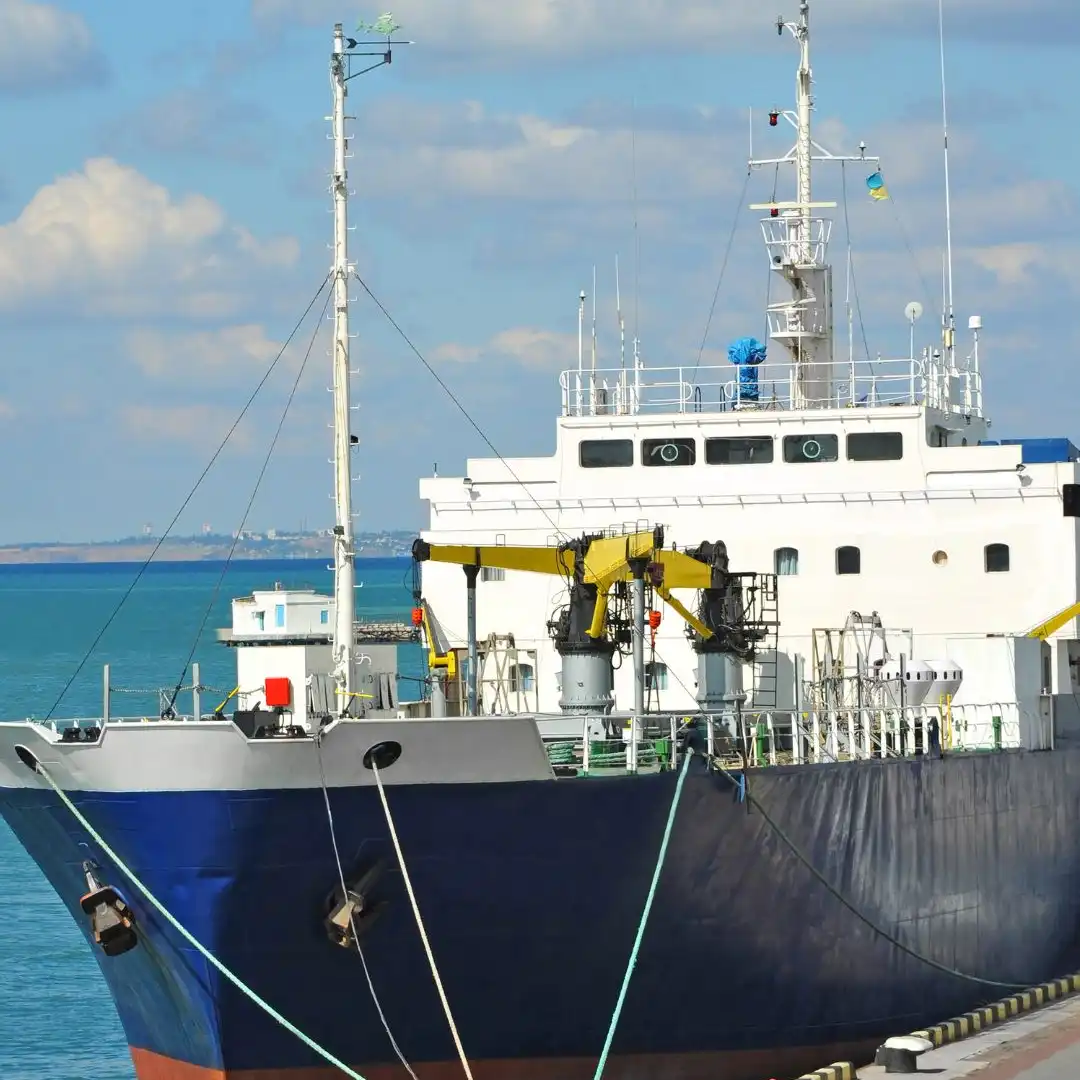
The structural identifiers of a VLOC are the very long, near-block hull, seven to nine holds and matching hatches running fore-to-aft, a fully gearless main deck, a single-island aft superstructure, a raked stem, and a transom stern. The hull is optimised for one dense cargo loaded by shore conveyor and discharged by shore grab and conveyor, so the deck is left clear and no cargo gear is fitted. The roughly 65m beam and 23m draught of a Valemax place her far outside any canal and limit her to the few deep-water ore terminals built or dredged for the class.
Reference example
Representative Valemax VLOC, Brazil to China iron ore
- Vessel (composite)
- Valemax-class VLOC, ~400,000 DWT
- IMO
- Representative composite; no specific IMO cited
- Built
- 2011 onward (first and second generation Valemax)
- DWT
- ~400,000 t summer
- Dimensions
- LOA ~362m, beam ~65m, draught ~23m
- Holds and hatches
- 7 / 7, gearless
- Typical trade
- Tubarao or Ponta da Madeira to Qingdao, Caofeidian or Dongjiakou iron ore
This fixture template represents the Valemax class that lifts iron ore parcels of roughly 380,000 to 400,000 t from Tubarao or Ponta da Madeira to the tier-one Chinese ore receivers. The named lead ship of the original programme was the Vale Brasil (IMO 9488918, later renamed Ore Brasil), built by DSME in South Korea and delivered to Vale on 30 March 2011 at 402,347 dwt, and the class has since been operated by Vale and by a set of partner owners under long-term contracts of affreightment rather than on the spot market.
Around 11,000 nautical miles one way around the Cape of Good Hope, a Valemax on slow steaming completes a round voyage over a long laden-plus-ballast cycle. Loading at the Brazilian terminals runs at high shore-conveyor rates, and discharge at the dedicated Chinese receivers runs on grab and conveyor handling sized for the class.
Common chartering considerations
- Contract structure: VLOC tonnage trades almost entirely under long-term contracts of affreightment, not the open spot market. The capital cost and single-trade design of the class mean owners commit the tonnage for years against a guaranteed cargo programme.
- Port and lane lock-in: a VLOC is only as flexible as the deep-water ore terminals that can take her. A receiver outage or a draught restriction has no easy fallback within the class; the cargo must down-tier to Capesize, often with transshipment.
- Counterparty concentration: VLOC employment is concentrated around a small number of iron ore miners and Chinese steel mills, so counterparty and programme risk is more concentrated than on the broad Capesize spot market.
- Fuel consumption: a Valemax on slow steaming burns VLSFO, and bunker exposure is a dominant variable cost on the long Brazil to China round voyage. Bunker-clause language is a fixture-level negotiation.
- EEXI and CII implications: IMO energy-efficiency (EEXI) and carbon-intensity (CII) rules, in force since 1 January 2023 (IMO MEPC.328(76)/336(76)) with the first CII ratings issued in 2024, interact with the fixed long-haul ore lane the class runs. Speed and consumption warranties in the underlying contracts are read against CII ratings.
Frequently asked questions
What is a VLOC?
How big is a VLOC compared to a Capesize?
What is a Valemax?
Does a VLOC have cargo cranes?
Which ports can handle a VLOC?
Why do VLOCs almost only carry iron ore?
Scope and what this page does not cover
This page describes the VLOC as a dry bulk vessel class, the dimensional band that defines it, and the cargo and lane structure it serves. It does not forecast iron ore freight rates, opine on sale-and-purchase decisions for specific vessels, or interpret jurisdiction-specific contract or casualty law. For those, work with chartering counsel and a desk broker against current Baltic Exchange and Clarksons data.