How does the ship chartering process work?
Chartering a ship is a negotiation run through brokers that moves a cargo order from enquiry to a binding contract. The charterer circulates the cargo, owners offer tonnage, the two sides counter on main terms, fix on subjects, lift subjects, agree a recap and then sign the charter party.
That sequence is the spine of every dry-bulk fixture, whether it is a single coal parcel or a long programme. The terminology is industry-standard and the order is fixed: an offer is “firm” when it is open for acceptance for a stated period, counters are exchanged on an “accept or except” basis (each side accepts what it can and re-offers the rest), and the deal becomes a fixture only once the agreed conditions, the “subjects”, have been satisfied and lifted. The broker sits between the charterer and the owner, carrying offers and counters, drafting the recap and chasing the subjects to a close. If you have cargo, ports, and a laycan ready now, Charter a Bulk Carrier and get a market-benchmarked offer the same business day.
The instrument being negotiated is usually a voyage charter for a single lift, or a time charter for a period of use. The process below is the same shape for both. What differs is the set of main terms in play: a voyage charter negotiates freight per tonne and laytime, a time charter negotiates a daily hire rate and delivery and redelivery ranges.
The chartering process stage by stage
The fixture runs through a fixed set of named stages. Each stage has a precise meaning in the market, and skipping or blurring one is where disputes start. The timeline below uses the canonical stage names in the order they occur.
- 01
Enquiry
Stage 1The charterer circulates the cargo order through brokers to owners with open tonnage. Example: a trader sends a Supramax order for 55,000 mt grain, Santos to Iran range, laycan 1 to 10 next month, to a panel of brokers who pass it to suitable owners.
- 02
Firm offer
Stage 2An owner makes a firm offer: a set of main terms open for acceptance for a stated time, after which it lapses. Example: owner offers firm USD 34.00 per tonne FIO, GENCON form, valid until 1700 hours London time, reply same day.
- 03
Counters (accept or except)
Stage 3The sides exchange counters on an accept-or-except basis: each accepts the terms it can and re-offers the rest, narrowing the gap. Example: charterer counters USD 31.50, accepts the form and laytime, excepts the freight and the demurrage rate.
- 04
Fixed on subjects
Stage 4Main terms are agreed but the fixture is conditional on stated subjects: subject stem (cargo availability), subject receivers, subject suppliers and subject management or board approval. Example: fixed at USD 32.75 sub stem and sub charterer's board, 24 hours to lift.
- 05
Subjects lifted
Stage 5Each subject is confirmed or fails within its time limit. Once all are lifted the conditions fall away and a binding fixture exists. Example: charterer confirms stem and posts board approval inside the 24 hour window, so subjects are lifted clean.
- 06
Recap
Stage 6The broker circulates a recap: the agreed main terms plus rider clauses, sent to both principals for checking. Example: recap lists cargo, lane, laycan, freight, laytime, demurrage, commission and the GENCON rider set with charterer's and owner's clauses noted.
- 07
Clean recap
Stage 7Both sides confirm the recap with no outstanding amendments. The clean recap is the agreed, binding record of the fixture. Example: owner and charterer reply 'recap confirmed clean', closing the negotiation.
- 08
Charter party signed
Stage 8The formal charter party is drawn from the clean recap and signed by both principals. It restates the recap in full contract form. Example: the GENCON 2022 charter party is issued, signed and exchanged within a few working days of the clean recap.
- 09
Performance
Stage 9The vessel performs: it arrives within laycan, tenders notice of readiness, works cargo within laytime, and freight, demurrage or dispatch are settled afterwards. Example: ship loads at Santos, sails, discharges, and the laytime account is reconciled into a final freight and demurrage invoice.
The pivot point is the move from “fixed on subjects” to “subjects lifted”. Until every subject is lifted there is no binding contract, and either side can usually walk if a subject fails. The binding fixture is struck once subjects are lifted and the recap is confirmed clean, not at signature of the later charter party, which is why the recap is drafted with the same care as the contract itself.
Who does what: charterer, owner and broker
Three parties drive the fixture, and each owns a distinct part of the work. The split below holds for a voyage charter; on a time charter the charterer also takes on bunkers and port costs during the hire period.
| Party | What they bring | What they own in the process |
|---|---|---|
| Charterer (cargo interest) | The cargo, the lane, the laycan window and a freight or hire budget | Issues the enquiry, sets the cargo subjects (stem, receivers, suppliers), lifts or fails subjects, presents and works the cargo within laytime |
| Owner (shipowner or disponent owner) | The vessel, its open position and its operating cost base | Makes the firm offer, sets the management or board subject, runs the voyage, tenders the notice of readiness and invoices freight and any demurrage |
| Broker | Market intelligence, the panel of counterparties and the drafting desk | Circulates the order, carries offers and counters, drafts the recap, chases subjects to a close and reconciles the laytime account |
The broker is not a passive postbox. A competent ship broker knows which owners have tonnage opening into the load region, what the market is paying on comparable lanes, and where the counterparty is likely to give ground. That market read is what compresses the counters stage and keeps the fixture from lapsing on a firm offer that expires unanswered. Commission, usually expressed as a percentage of freight or hire, is the broker’s pay for that work and is recorded as a main term in the recap.
A fixture traced through the process
The card below follows one anonymised, representative fixture through every stage, from the first enquiry to the settled freight account. The figures are illustrative, not a live quote.
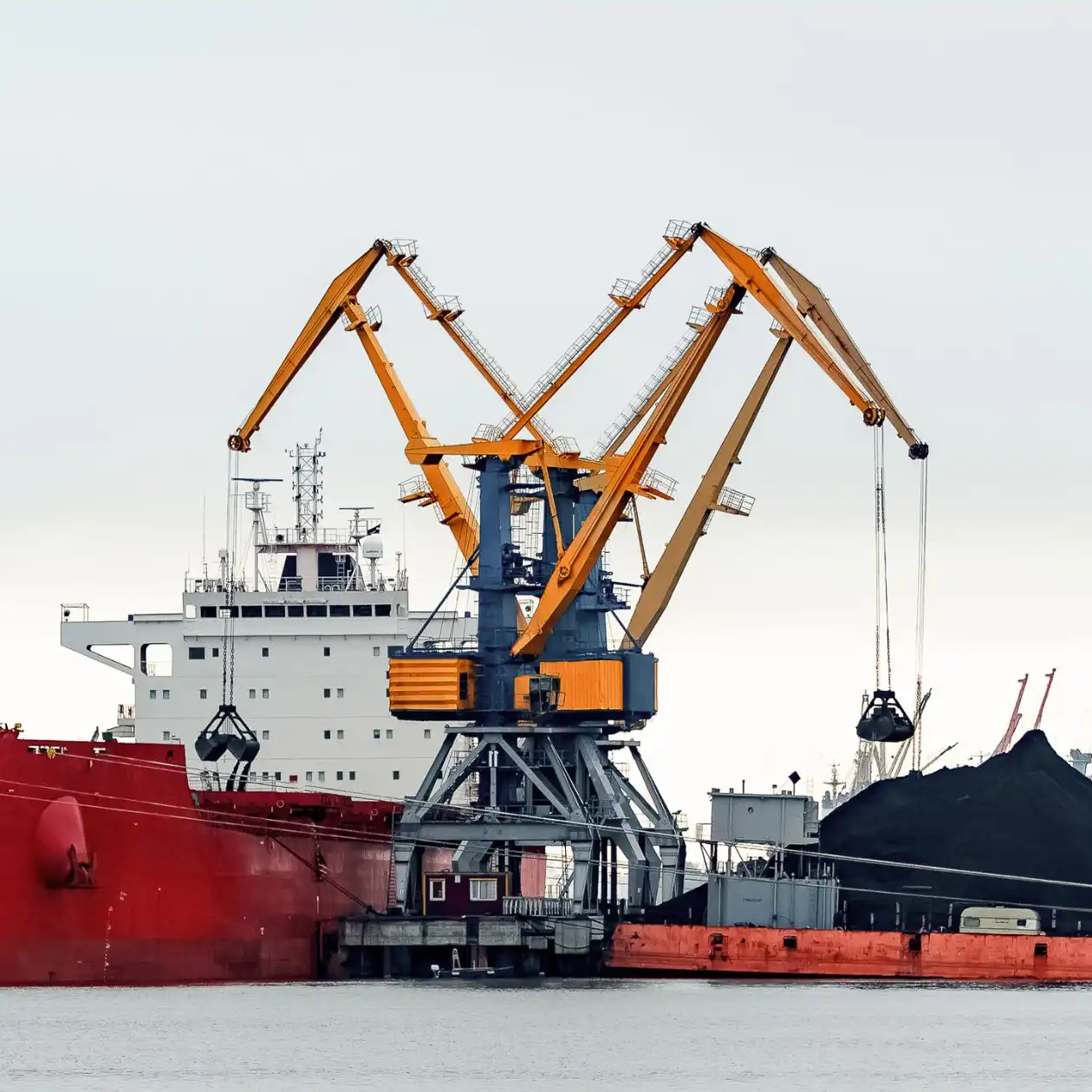
Panamax coal, Newcastle to South Korea
- Vessel
- Modern Panamax, abt 82,000 dwt
- Cargo
- 75,000 mt thermal coal, 10 pct molo
- Lane
- Newcastle, Australia to Gwangyang range
- Laycan
- 10 day window, next month
- Freight rate
- USD 16.50 per tonne FIO
- Laytime
- Loading and discharge rates combined, SHEX
- Demurrage
- USD 20,000 per day, pro rata, both ends
- Charter party form
- GENCON 2022, charterer's rider clauses
Enquiry. A utility’s trading desk sends a coal order to a broker panel: 75,000 mt, 10 pct more or less owner’s option, Newcastle to a South Korean discharge range, laycan a ten day window next month.
Firm offer and counters. An owner with a Panamax opening in the Pacific offers firm USD 17.25 per tonne FIO on GENCON 2022, valid until end of the London day. The charterer counters USD 15.75, accepting the form and laytime but excepting freight and the demurrage rate. After two more rounds on an accept or except basis the freight settles at USD 16.50 and demurrage at USD 20,000 per day.
Subjects and recap. The deal is fixed sub stem and sub charterer’s management approval, with 24 hours to lift. The trading desk confirms the coal stem and posts internal approval inside the window, so subjects are lifted clean. The broker circulates the recap, both principals check it, and it is confirmed clean.
Signing and performance. The GENCON 2022 charter party is drawn from the clean recap and signed within a few working days. The ship arrives within laycan, tenders notice of readiness, loads, sails and discharges. The terminal at load runs slightly slow, the ship goes one day onto demurrage, and the final freight and demurrage account is reconciled and invoiced. On a 75,000 tonne stem at USD 16.50, gross freight is about USD 1.24 million before commission and demurrage.
The main terms negotiated in a fixture
Every fixture is built from the same short list of negotiated main terms. They are the headline of the firm offer, the substance of the counters and the body of the recap. The table below lists the canonical terms on a dry-bulk voyage charter, each linked to the page that explains it in detail.
| Main term | What is negotiated | Detail |
|---|---|---|
| Vessel and tonnage | The named ship or a described type and deadweight, and whether substitution is allowed | Panamax |
| Cargo | The commodity, grade and any stowage or trimming requirements | Coal |
| Quantity | The stem in tonnes, plus a more-or-less margin at owner's or charterer's option | Stated in the recap |
| Laycan | The arrival window: laydays for tendering NOR and the cancelling date | Laycan |
| Load and discharge ports | The named ports or ranges, berth or anchorage terms and any rotation | Named in the recap |
| Freight rate | The price of carriage, usually USD per tonne on the agreed quantity | Freight rate |
| Laytime | The free time allowed to work cargo, as a fixed period or a rate per day, and the day basis (SHEX, SHINC, weather working) | Laytime |
| Demurrage | The daily sum the charterer pays for using more than the allowed laytime, and any dispatch for time saved | Demurrage |
| Commission / brokerage | The percentage of freight or hire payable to the broker, and any address commission to the charterer | Stated in the recap |
| Charter party form | The base form (GENCON 2022 is the dry-bulk voyage standard) and the rider clauses bolted on | Charter party form |
These terms do not stand alone. The freight rate is priced on an assumption about how fast the cargo will work, which is set by the laytime and the loading and discharge rate; the demurrage rate is benchmarked to the vessel’s daily earning capacity; and the laycan governs whether the fixture survives to performance at all. A change to any one term ripples through the others, which is why the counters stage is iterative rather than a single round.
What goes wrong in the chartering process
- Letting a firm offer lapse. A firm offer is open only for the stated period. Replying after it expires means there is no offer to accept, and in a moving market the owner may have fixed elsewhere or repriced. Diary the validity time and answer inside it.
- Treating “fixed on subjects” as a done deal. A fixture fixed on subjects is conditional, not binding. Booking the cargo, committing the berth or standing down other tonnage before subjects are lifted is a classic mistake. Until subjects lift, either side can usually walk.
- Missing a subject’s time limit. Each subject (stem, receivers, suppliers, management or board approval) has a deadline to lift. Let it pass and the subject fails by default, which can collapse the whole fixture even though the main terms were agreed.
- Sloppy recap drafting. The clean recap is the binding contract, not a draft. An ambiguous recap (silent on the laytime day basis, the more-or-less margin or whose rider clauses govern) produces exactly the disputes the signed charter party was meant to prevent. Recap with the same precision you would the contract.
- Confusing the recap and the signed charter party. Some desks behave as if nothing is binding until the charter party is signed. It is not so: the clean recap fixes the deal, and the later document restates it. Acting before the recap, or assuming the recap is provisional, both cause problems.
- Pricing freight without pricing the laytime risk. Quoting a freight rate without nailing down the laytime day basis and the demurrage rate leaves the time risk unpriced. A slow terminal then turns into the owner’s loss or the charterer’s surprise bill.
Scope and what this page does not cover
This page explains the dry-bulk chartering process as a workflow: the named stages from enquiry to performance, who does what among charterer, owner and broker, the main terms negotiated, and where fixtures commonly fail. It does not draft or amend charter-party clauses, opine on whether a particular subject was validly lifted, resolve a contested recap, or advise on the law and forum governing a fixture. Those are matters for chartering counsel and a desk-side broker working from the actual recap and charter party. All rates, vessel particulars, lanes and worked figures here are representative and anonymised, not live quotes or real fixtures, and should be checked against current Baltic Exchange route assessments before any commercial decision.