What is scrap metal as a sea-borne cargo?
Scrap metal is recycled ferrous material, mainly heavy melting scrap and shredded scrap, carried in dry bulk and grabbed or dropped loose into the hold. It is a genuine loose-bulk commodity with a citable bulk density, fed to electric-arc steelmaking, and distinct from finished steel.
Ferrous scrap is the feedstock for electric-arc-furnace steelmaking, which is why the trade tracks the global shift from blast-furnace to recycled-steel production. The cargo arrives at the load berth as graded piles: heavy melting scrap (HMS 1 and HMS 2), shredded scrap from automotive and white-goods shredders, and baled bundles of lighter material pressed for density. It is not poured like grain or coal. It is grabbed by clamshell or magnet and dropped into the hold, and that single fact drives most of its shipping problems: irregular shape, sharp edges, low and variable bulk density, and a real risk of denting the tank-top on a heavy drop.
The regulatory picture splits in two. Whole HMS and shredded scrap are generally carried as inert, non-self-heating cargoes. The loose-bulk by-product form, ferrous swarf (machining turnings, borings and shavings), is a different and more dangerous animal: it carries the IMSBC Code 2024 schedule FERROUS METAL BORINGS, SHAVINGS, TURNINGS or CUTTINGS, UN 2793, Class 4.2, Group B, a self-heating cargo. This page treats loose HMS and shredded scrap as the dominant subject and contrasts the swarf schedule where it matters.
Scrap metal cargo properties
| Property | Value | Unit / Reference |
|---|---|---|
| Bulk density | 0.7 to 1.5 | t/m3, form dependent (HMS, shredded, bundled), commonly cited band |
| Stowage factor | 0.7 to 1.5 | m3/t, broadly inverse of density, form dependent |
| IMSBC schedule (swarf) | FERROUS METAL BORINGS, SHAVINGS, TURNINGS or CUTTINGS | UN 2793, Class 4.2, Group B, self-heating (IMSBC Code 2024) |
| IMSBC group (whole HMS / shredded) | Carried as non-self-heating | Generally inert; confirm the applicable schedule for the exact grade (desk note) |
| Abrasion / tank-top damage | High | Drop-loading dents and scores tank-top and hopper plating; structural inspection issue |
| Angle of repose | Not applicable | Irregular interlocking pieces, not a free-flowing granular cargo |
| Transportable moisture limit | Not applicable | TML applies only to Group A cargoes; scrap is not a liquefaction risk |
| Hazard profile | Swarf self-heats; whole scrap inert but abrasive and sharp | IMSBC Code 2024, FERROUS METAL BORINGS schedule for swarf |
| Reference | IMSBC Code 2024 edition | International Maritime Solid Bulk Cargoes Code, IMO |
The headline number to read carefully is bulk density. Tightly packed shredded and bundled material can approach the upper end of the band, while loose, bulky HMS sits lower and stows light. That spread feeds straight into parcel-size planning: the same hold volume can carry a very different tonnage depending on grade, so the loading plan is driven by the cubic capacity of the hold as much as by deadweight. The swarf schedule is the one entry on this page with active hazard precautions. For whole HMS and shredded scrap the dominant on-board concern is mechanical, not chemical: abrasion, plate denting from drop-loading, and the personnel hazard of sharp irregular pieces during hold work.
Vessel typing and parcel sizes
| Vessel class | Suitability | Typical parcel size | Notes |
|---|---|---|---|
| Handysize | Common | 20,000 to 38,000 t | Geared boxes serve scrap berths without shore cranes; short-sea and feeder scrap lanes. |
| Handymax / Supramax | Dominant | 40,000 to 63,000 t | Workhorse for deep-sea scrap into Turkey and South Asia; own grab cranes for grab discharge. |
| Panamax | Conditional | 65,000 to 82,000 t | Used on long-haul US and EU scrap into Asia where parcel size and berth draught allow. |
| Capesize | Rare | 100,000 t and up | Seldom used; scrap parcels and berth depth rarely justify Capesize tonnage. |
Scrap is a geared-tonnage trade. The dominant export lanes load at smaller berths and discharge at receivers, especially Turkish and South Asian steel mills, that rely on the vessel’s own cranes and grabs rather than shore handling. That pushes the trade onto geared Handymax and Supramax tonnage, with Handysize for short-sea and feeder volumes. Panamax appears on longer hauls where the parcel and the discharge draught support it, but the cargo’s low and variable density means a Panamax often cubes out before it deadweights out, leaving the ship light. Capesize is rare in scrap. See the bulk-carriers hub for the full class ladder.
A second consideration is hold protection. Operators running scrap-heavy schedules often dunnage the tank-top or accept the structural wear as a cost of the trade, because the drop-loading of heavy HMS scores and dents plating in a way that pourable cargoes never do.
How scrap metal ships in practice
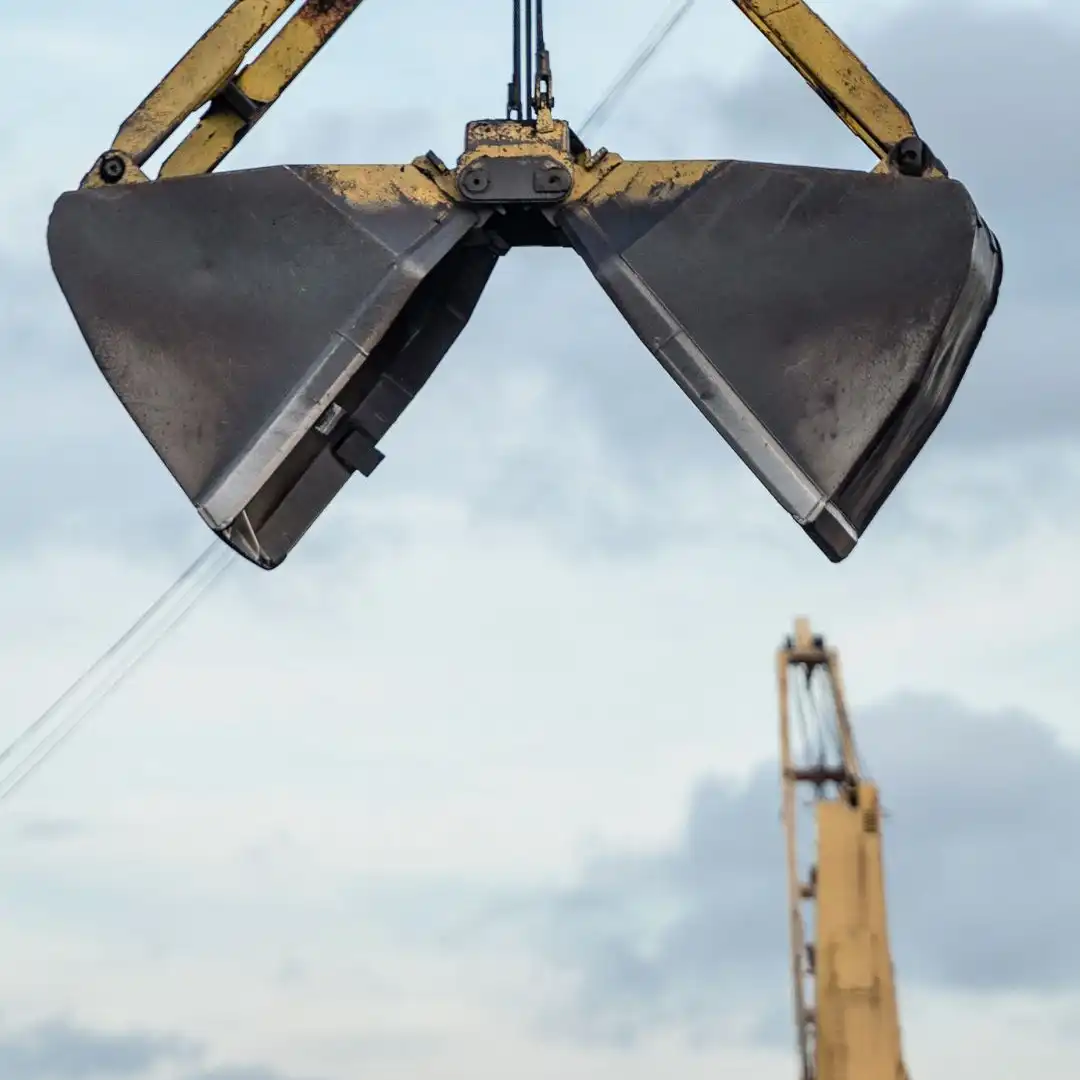
Scrap loads by grab crane and magnet, not by conveyor. At the export berth, graded piles are picked from the quay or from feeder barges and dropped into the hold by clamshell grab or by lifting magnet for ferrous grades. The loading rate is far slower than a conveyor-fed coal or ore berth, because each grab cycle moves a relatively small, irregular bite. The loading plan trims the cargo to fill the cubic capacity of the hold and to distribute weight so that heavy drops do not concentrate impact on one section of tank-top.
For whole HMS and shredded scrap there is no continuous gas or temperature monitoring regime of the kind the coal trade runs, because the cargo is treated as inert. The live operational issues are mechanical: protecting tank-top and hopper plating from impact, managing sharp-edged material safely during hold work, and documenting any pre-existing structural condition so that scrap-related denting is not disputed at off-hire survey. Where the parcel is or includes ferrous swarf, the IMSBC FERROUS METAL BORINGS schedule applies and the self-heating precautions for a Class 4.2 Group B cargo come into force, including keeping the material dry and free of oil and limiting voyage exposure.
Discharge is by grab and magnet at the receiving mill or scrapyard, the mirror image of loading. The fixture is typically on FIO terms, with laytime and demurrage negotiated against the berth’s grab-discharge norm, which is slower than the rates seen on pourable cargoes. See loading and discharge rate for the contractual mechanics and voyage charter for the standard scrap fixture form.
Major trade routes
- United States East Coast and Gulf to Turkey: a core deep-sea scrap lane feeding Turkish electric-arc mills, predominantly geared Supramax and Handymax tonnage.
- Northwest Europe to Turkey and the East Mediterranean: short-to-medium-haul ferrous scrap, Handysize and Handymax dominant, frequent multi-port load berths.
- Europe and North America to South Asia (Bangladesh, India, Pakistan): longer-haul scrap into the subcontinent’s induction and arc mills, Supramax and occasional Panamax.
- Japan and Northeast Asia intra-regional: short-sea ferrous scrap into regional mills, Handysize and small geared tonnage.
- Latin America and West Africa export parcels: smaller, less regular volumes feeding the same Turkish and South Asian receivers.
Turkey anchors the deep-sea scrap map as the dominant import destination for electric-arc-furnace feed, with the United States, the European Union and the United Kingdom among the principal export origins. South Asia is the second major demand centre. For the wider lane catalogue and regional context see the routes-markets hub and the dry-bulk-shipping hub.
Scrap metal vs finished steel
Loose ferrous scrap and finished steel are routinely lumped together as “steel cargo,” but they are different shipping problems governed by different rule books. Scrap is loose dry bulk under the IMSBC Code. Finished steel products (coils, plates, billets, rebar, beams) are unitised break-bulk lashed and secured under the IMO CSS Code.
| Scrap metal (loose bulk) | Finished steel (break-bulk) | |
|---|---|---|
| Cargo form | Loose HMS, shredded, bundles | Coils, plates, billets, rebar, beams |
| Rule book | IMSBC Code (solid bulk cargo) | IMO CSS Code (cargo securing) |
| Loading method | Grab and magnet, dropped loose | Crane-lifted unit, stowed and lashed |
| Stowage | Filled to cubic capacity of hold | Blocked, dunnaged and secured against shift |
| Dominant concern | Abrasion, tank-top denting, swarf self-heating | Securing, chafe, rust and handling damage to units |
| Bulkargo page | This page | /project-cargo/steel-products/ |
Use the scrap classification when the commodity is recycled metal grabbed loose into the hold. Use the finished-steel handling regime when the commodity is a manufactured unit that must be lifted, blocked and lashed. The cargo gear, the securing standard, the surveyor’s checklist and the claims profile all differ, so a fixture written against the wrong form will fail at the berth. For finished steel see steel products, the project-cargo service, and the dry-cargo overview.
Reference example
Supramax HMS scrap, US East Coast to Turkey
- Cargo grade
- HMS 1 and 2 ferrous scrap, 80/20, deep-sea parcel
- Lane
- US East Coast scrap berth to East Mediterranean Turkish mill
- Vessel band
- Geared Supramax, around 58,000 dwt
- Parcel size
- Around 40,000 mt, cube-limited by grade
- Loading rate
- Grab and magnet, multi-grab berth, well below conveyor rates
- Discharge rate
- Grab and magnet at receiving mill, FIO
- Notable clause
- Tank-top condition survey before and after, hold-cleanliness and dunnage clause, freight against original BL
The cargo cubes out before it deadweights out: loose HMS stows light, so the parcel is set by the cubic capacity of the holds rather than by full deadweight, and the ship sails below her marks. The loading plan distributes heavy grabs across the tank-top to avoid concentrating drop impact on one section of plating.
Because whole HMS is treated as inert, there is no gas or temperature monitoring regime. The live documentation is the structural condition survey: a tank-top and hopper condition record before loading and after discharge protects both sides against a dispute over scrap-related denting at the next off-hire survey.
The fixture is on FIO terms with laytime calculated against the berth’s grab-discharge norm, which is materially slower than a pourable cargo. Demurrage is benchmarked to the spot geared-Supramax daily rate for the month of fixture.
Common loading and discharge issues
- Tank-top and hopper denting from drop-loading: heavy HMS pieces dropped from the grab dent and score plating. A documented before-and-after structural condition survey is the defence against an off-hire damage dispute.
- Cargo cubes out before it deadweights out: loose HMS stows light, so the ship can fill her holds well below her marks. Parcel size and freight economics turn on the cubic capacity of the hold, not deadweight alone.
- Swarf self-heating where the parcel includes turnings: ferrous borings, shavings and turnings carry the UN 2793, Class 4.2, Group B schedule. If swarf is mixed in or offered as a separate parcel, the self-heating precautions apply: keep it dry, free of oil, and limit voyage exposure.
- Wet and oily contamination of the cargo: rain-soaked or oil-bearing scrap raises both the self-heating risk on swarf grades and the weight-dispute risk on a tonnage-priced cargo. Loaders and receivers watch moisture closely.
- Sharp-edged material and hold-work safety: irregular, sharp pieces make hold cleaning and any in-hold trimming hazardous for crew and stevedores, a recurring personnel-safety item in the scrap trade.
- Grade and grade-mix disputes at discharge: HMS 1 versus HMS 2 versus shredded carries different value, and disputes over the delivered grade mix surface at the receiving mill. Independent draught survey and pre-shipment grading reduce the exposure.
Scope and what this page does not cover
This page explains loose ferrous scrap (HMS, shredded and bundles) as a sea-borne dry bulk commodity, the IMSBC position including the self-heating swarf schedule, and the vessel-class and lane structure of the trade. It does not cover finished steel products, which are unitised break-bulk under the IMO CSS Code and are documented at steel products. It does not forecast scrap prices or arbitrage spreads, opine on which origin to fix from next quarter, or interpret jurisdiction-specific cargo-claim case law. For current scrap trade volumes and price benchmarks work with a desk broker against named sources such as BIR, UNCTAD, Clarksons and the established metals-pricing services. To fix a scrap parcel, get a quote and the desk will size geared tonnage to your grade and lane.