What is clinker as a sea-borne cargo?
Clinker is the granular intermediate product of cement manufacture, shipped in bulk as IMSBC Group C cargo with a stowage factor of 0.65 to 0.85 cubic metres per tonne, abrasive to hold steel, and frequently loaded hot at 60 to 90 degrees Celsius straight off the kiln.
Cement clinker is what comes out of a cement kiln before the grinding stage. Limestone, clay and minor additives are sintered at around 1,450 degrees Celsius into hard fused nodules of three to twenty-five millimetres. Those nodules are clinker. When clinker reaches a cement plant near the consumer market, it is ground with gypsum into the finished cement powder. As a sea cargo, clinker sits under the IMSBC Code 2024 schedule CEMENT CLINKER and carries Group C classification, meaning no liquefaction risk and no chemical hazard. The schedule is short because clinker is operationally simpler than its downstream product cement, but the same schedule flags abrasion to hold steel and loading-temperature considerations as the two recurring carriage issues.
The international clinker trade is the safety valve of the global cement industry. Cement majors run kiln capacity where energy and limestone are cheap (Vietnam, Turkey, Egypt, China historically) and ship clinker to grinding plants near the consumer market. This decoupling is the reason clinker now fixes more frequently on Supramax tonnage than cement does. For broker desks, clinker is one of the easier dry bulk cargoes to fix because it tolerates conventional hold preparation and is forgiving of small residues from a prior bulk stem.
Clinker cargo properties
| Property | Value | Unit / Reference |
|---|---|---|
| Stowage factor | 0.65 to 0.85 (typical 0.75) | m3/t (IMSBC Code 2024, CEMENT CLINKER schedule) |
| Bulk density | 1.20 to 1.50 | t/m3 (loose, IMSBC schedule) |
| Angle of repose | 30 to 40 | degrees (granular) |
| IMSBC group | Group C | IMSBC Code 2024 (no liquefaction risk, no chemical hazard) |
| IMSBC schedule entry | CEMENT CLINKER | IMSBC Code 2024, individual schedule |
| Hazard classification | Not classified as IMDG | Non-hazardous bulk; abrasive contact hazard |
| Particle size | 3 to 25 mm nodules | Producer mill certificate |
| Moisture content | Typically less than 0.5 pct | Producer despatch advice |
| Self-heating | Nil after kiln cool-down | IMSBC schedule |
| Temperature on load | 60 to 90 deg C when prompt off the kiln; ambient when silo-aged | Producer despatch advice |
| Abrasion to hold steel | Significant | P and I club guidance, IMSBC schedule |
| Cleaning category | Standard bulk; not food-grade-equivalent | Industry hold-survey practice |
Vessel typing and parcel sizes
Clinker is a Supramax and Handysize cargo by volume and lane structure. The bulk of intra-Asia and intra-Mediterranean clinker moves on geared Supramax tonnage. Panamax appears occasionally on long-haul lanes where the parcel size justifies the deeper draught. Capesize is structurally absent because clinker terminals at both ends are sized for smaller parcels and because the abrasion to Capesize hold steel is uneconomic over a cargo’s lifetime.
| Vessel class | Suitability | Typical parcel size | Notes |
|---|---|---|---|
| Capesize | Rare | Not standard for clinker | Terminal draught and parcel structure rule it out; see Capesize |
| Panamax | Occasional long-haul | 55,000 to 70,000 mt | Used where producer can aggregate stem; see Panamax |
| Supramax | Dominant | 45,000 to 55,000 mt | Geared tonnage preferred for ports with limited shore cranage; see Supramax |
| Handysize | Strong | 20,000 to 35,000 mt | Lane workhorse for short-haul intra-Asia and Mediterranean; see Handysize |
| Handymax | Used | 40,000 to 50,000 mt | Transitional segment; geared 5x30 tonne tonnage covers most clinker discharge ports; see Handymax |
The vessel selection conversation usually pivots on draught at the receiver port and on whether the receiver expects geared discharge. Bangladeshi and Philippine grinding plant berths are typically Handysize draught and demand geared tonnage. Mediterranean and West African receivers are mixed. Producer ports in Vietnam and Turkey can load any of the four classes above. Broker desks running a clinker order book will normally hold a position list of geared Supramax tonnage with grab gear of around five-by-thirty tonnes as the default match. See vessel size comparison for the dimensional bands and voyage charter for how clinker parcel size flows into freight quotes.
How clinker ships in practice
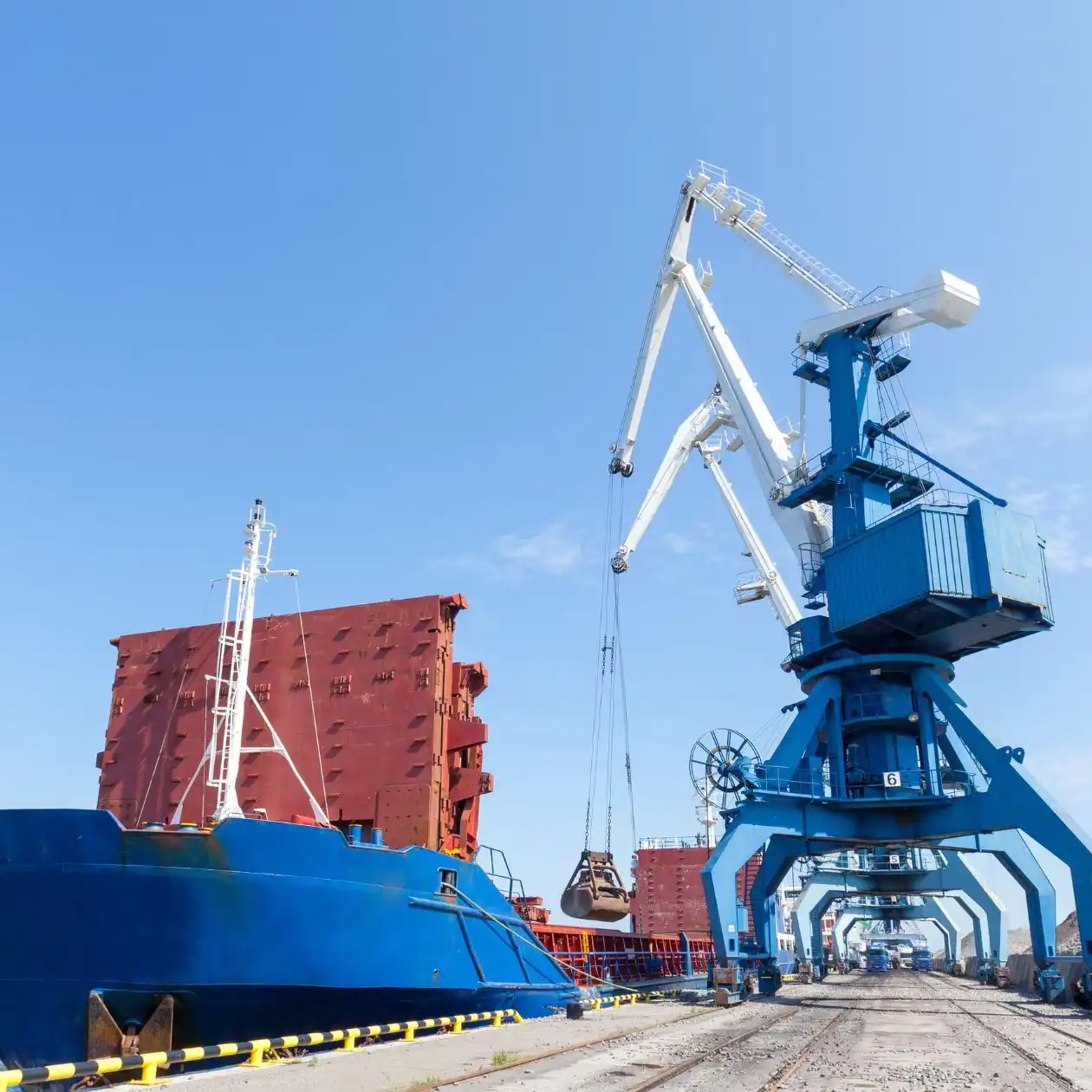
Loading is by enclosed conveyor or grab at producer terminals. Vietnam’s principal clinker export berths use conveyor systems that load at 7,000 to 10,000 tonnes per day; Turkish Mediterranean terminals run similar rates. Grab loading at lower-spec ports runs 3,000 to 5,000 tonnes per day. The cargo trims well because the granular structure builds a stable cone, and the master normally allows the cargo to find its angle of repose in the hold rather than pushing it into the corners.
Hold preparation for clinker is conventional. Holds must be clean and dry, but the food-grade-equivalent residue control demanded on cement is not required. A clinker fixture following grain, coal or iron ore is acceptable so long as the holds are swept and washed to standard. The hold-survey regime is lighter than on cement: a master’s certificate is usually sufficient and an independent surveyor is the exception rather than the rule. This is the structural reason clinker fixes more easily than cement on the same vessel pool. For the underlying mechanics, see notice of readiness and laytime.
Voyage care is light. Holds are battened and unventilated, the cargo is stable, and the abrasive nature of clinker means there is no working of the cargo in heavy weather. Discharge is almost always by grab, occasionally by clamshell on specialist receivers. Discharge rates of 4,000 to 6,000 tonnes per weather working day are typical. Abrasion to hold paint and tank-top steel is the cumulative carriage cost: a vessel that lifts clinker on five consecutive voyages will need hold paint touch-up earlier than the maintenance schedule would otherwise call for. Owners price this into the freight quote. See loading and discharge rate and demurrage for how the laytime regime monetises these rates.
Major trade routes
Clinker trade is structurally short-haul to medium-haul, anchored by intra-Asia volumes. The dominant lanes are:
-
Vietnam to the Philippines. The largest intra-Asia clinker lane by volume. Vietnamese cement producers (Vicem, Vissai and others) ship clinker to Philippine grinding plants on Supramax and Handysize tonnage with five to eight day round trips. The lane has run consistently at a multi-million-tonne annual cadence since the late 2010s.
-
Vietnam to Bangladesh. Long-running structural deficit market. Bangladeshi grinding plants concentrated around Chittagong and Mongla import clinker to feed domestic cement production. Handysize and Supramax with ten to fourteen day round trips. The lane carries a recurring draught restriction at the Bangladeshi end that pulls vessel selection toward smaller geared tonnage.
-
Turkey and Egypt to Africa and the Mediterranean. Turkish kiln capacity, particularly around Iskenderun and Aliaga, exports clinker to West Africa, the Levant and parts of southern Europe. Lane lengths run from three days intra-Mediterranean to fifteen days for West Africa. Supramax is the dominant tonnage.
-
Intra-Asia (Thailand, Indonesia, Malaysia). Smaller lanes feeding regional grinding plants. Often the same vessels rotating off the Vietnam to Philippines lane during slack periods.
-
North-West Europe to construction-boom markets. Northern European producers ship clinker to West African and Caribbean grinding plants when local kiln capacity is constrained. Lower volume than the intra-Asia or Turkey lanes but a recurring lane on the broker order book.
The trade volume reference points are CEMnet and Global Cement Magazine quarterly statistics, the Vietnam Cement Association annual exports report, and producer-side reporting from Vicem, Holcim, Heidelberg Materials and CRH. Verify lane volumes against current Global Cement trade data before committing to numbers in a fixture pitch.
Clinker vs cement
The clinker versus cement question is the most common disambiguation request on the broker desk. They are sequentially related (clinker is the kiln intermediate, cement is the ground end product) but they are different commercial cargoes with different carriage profiles.
| Clinker | Cement | |
|---|---|---|
| IMSBC schedule | CEMENT CLINKER | CEMENT |
| IMSBC group | Group C | Group C |
| Stowage factor (m3/t) | 0.65 to 0.85 | 0.65 to 0.75 |
| Form | Hard granular nodules, 3 to 25 mm | Fine grey powder, less than 75 microns |
| Loading temperature | 60 to 90 deg C when prompt off kiln | Ambient to about 60 deg C |
| Dust profile | Moderate (granular) | Severe (fluid in hold) |
| Hold cleanliness | Standard bulk | Very high (food-grade-equivalent residue control) |
| Abrasion on holds | High (abrasive on hold steel) | Low |
| Moisture risk | Lower (granular tolerates contact) | High (sets irreversibly) |
| Vessel preference | Supramax, Handysize | Handysize, Supramax, specialist cement carrier |
| Discharge complexity | Grab and conveyor; abrasion to equipment | Pneumatic or grab; dust complaints common |
| Relative fixture difficulty | Easier | Harder |
For a chartering desk, the practical implication is that cement cleans up after you and clinker abrades you. A vessel coming off a clinker fixture is in good shape to take grain, coal, iron ore or fertilizer next. A vessel coming off a cement fixture needs a careful hold-pass survey before the next stem is tendered if any stem-side residual is a concern. The lateral cross-reference is scrap-metal, which is the only cargo more abrasive to hold steel than clinker and which is structurally segregated from the cement and clinker rotation in most owner programmes.
Reference example
Supramax clinker, Vietnam to the Philippines
- Cargo
- 50,000 mt bulk cement clinker, prompt off kiln
- Lane
- Cam Pha or Nghi Son range to Cebu or Manila range
- Vessel
- Geared Supramax, 55,000 to 60,000 dwt, 5x30 tonne grabs
- Laycan
- 7 day window
- Loading rate
- 8,000 mt per weather working day SHINC
- Discharge rate
- 5,000 mt per weather working day SHEX
- Key clauses
- GENCON 2022 amended, temperature certificate at load, demurrage USD 14,000 per day pro rata, freight on delivery
The lane runs around 1,200 to 1,500 nautical miles one way and is one of the most efficient intra-Asia bulk lanes on the order book. Cycle times of five to eight days port-to-port keep the vessel earning at near-Baltic Supramax index levels for the segment when the lane is in season.
The temperature certificate at load is the operational gate. Prompt clinker straight off the kiln above 90 deg C is rejected; clinker silo-aged below 60 deg C is accepted without further survey. Loading at 8,000 tonnes per weather working day on Vietnamese conveyors and discharging at 5,000 tonnes per day on Philippine grab gear gives a fixed round-trip duration that allows owners to programme a series of three to four consecutive lifts.
Freight on delivery is the lane convention because the Vietnamese shipper and the Philippine receiver are typically established cement-group counterparts. Demurrage at USD 14,000 per day reflects the Supramax daily TCE for the relevant quarter on the segment.
The fixture is anonymised. The values reflect typical market structure for the lane.
Common loading and discharge issues
- Abrasion wear on hold paint and tank-top steel. Clinker nodules grind hold steel during cargo movement in heavy weather and during grab discharge. The cumulative damage is invisible on a single fixture but shows up over a multi-voyage programme. Owners building a clinker-heavy programme should price an early hold paint touch-up into the freight quote.
- High temperature on prompt-loaded clinker. Clinker loaded straight off the kiln at 80 to 90 deg C can deform hold paint, expand hatch coamings and cause condensation on cool hold sides during the first 48 hours of the voyage. The control is a temperature certificate at load with a documented threshold.
- Discharge dust restrictions at urban ports. Although clinker is less dusty than cement, grab discharge at quayside generates enough particulate to trigger air-quality stoppages in some receiver ports (notably in the Philippines and Bangladesh). The laytime clause should specify whether such stoppages count as weather-related interruptions.
- Quantity dispute on draught survey. Granular clinker holds an air void of two to five per cent depending on hold geometry and loading speed. Draught survey discrepancies of one per cent are routine and should be addressed in the freight clause as a tolerance band rather than as a dispute.
- Hot weather monsoon delays on Asian lanes. Monsoon-season swell at Philippine and Bangladeshi anchorages can delay tender of notice of readiness by 24 to 72 hours. The recap should clarify whether anchorage waiting time counts toward laytime.
- Cross-contamination with the previous cargo. Clinker following salt, sugar or fertilizer can pick up a thin residual film that affects the grinding process at the receiver mill. Cement majors typically require a hold survey certificate confirming the prior cargo or excluding specific categories.
Scope and what this page does not cover
This page covers conventional bulk clinker carriage on dry bulk tonnage in the dry bulk freight market. It does not cover clinker grinding chemistry, kiln operation, cement plant economics, or the broader cement and concrete industry value chain. For commercial structuring of a clinker programme, work with the ship-brokering team against current Baltic Exchange and producer-side reference data, and verify all IMSBC values against the live 2024 IMSBC Code at the load port. To price a clinker lift, get a quote.